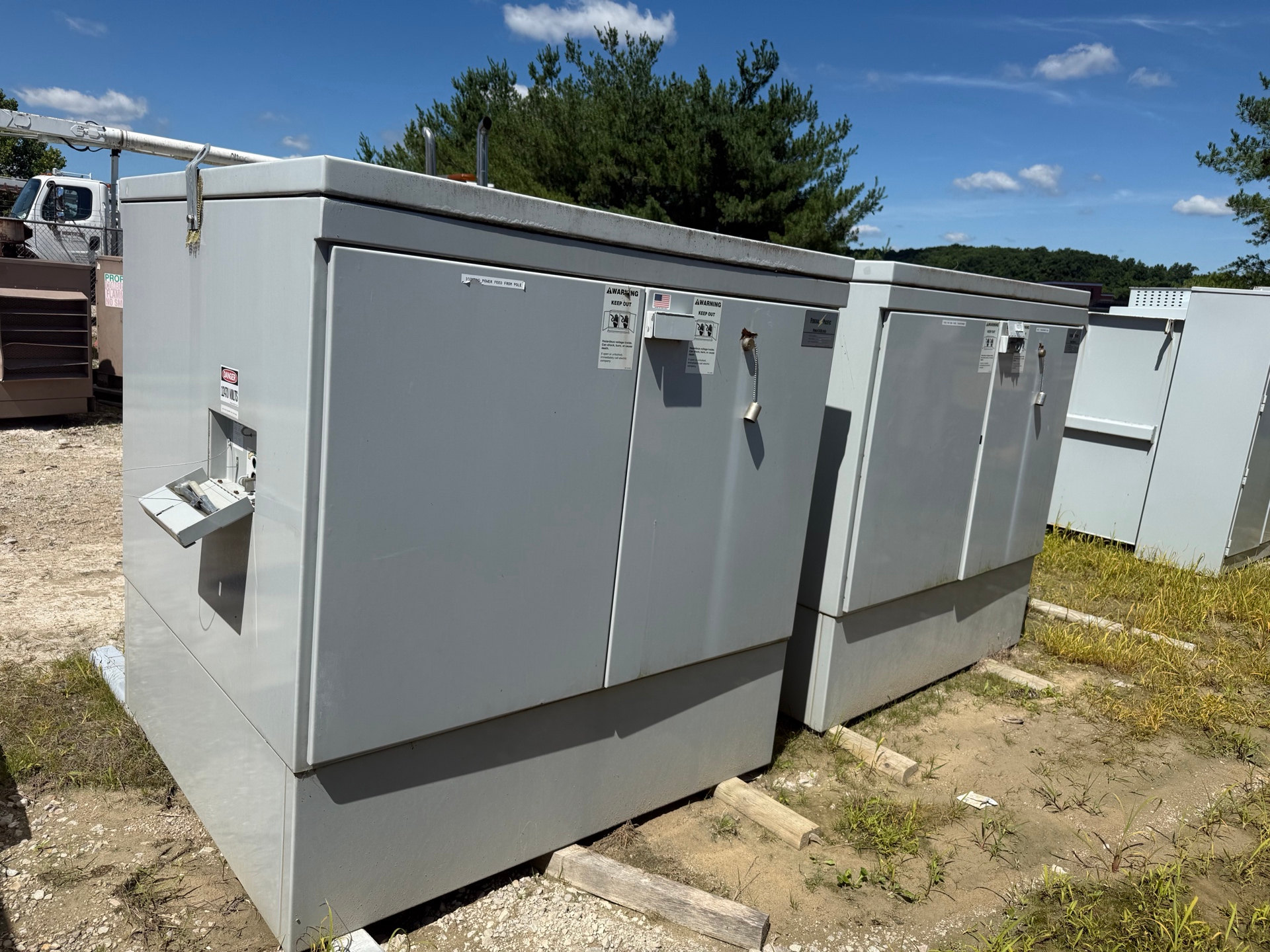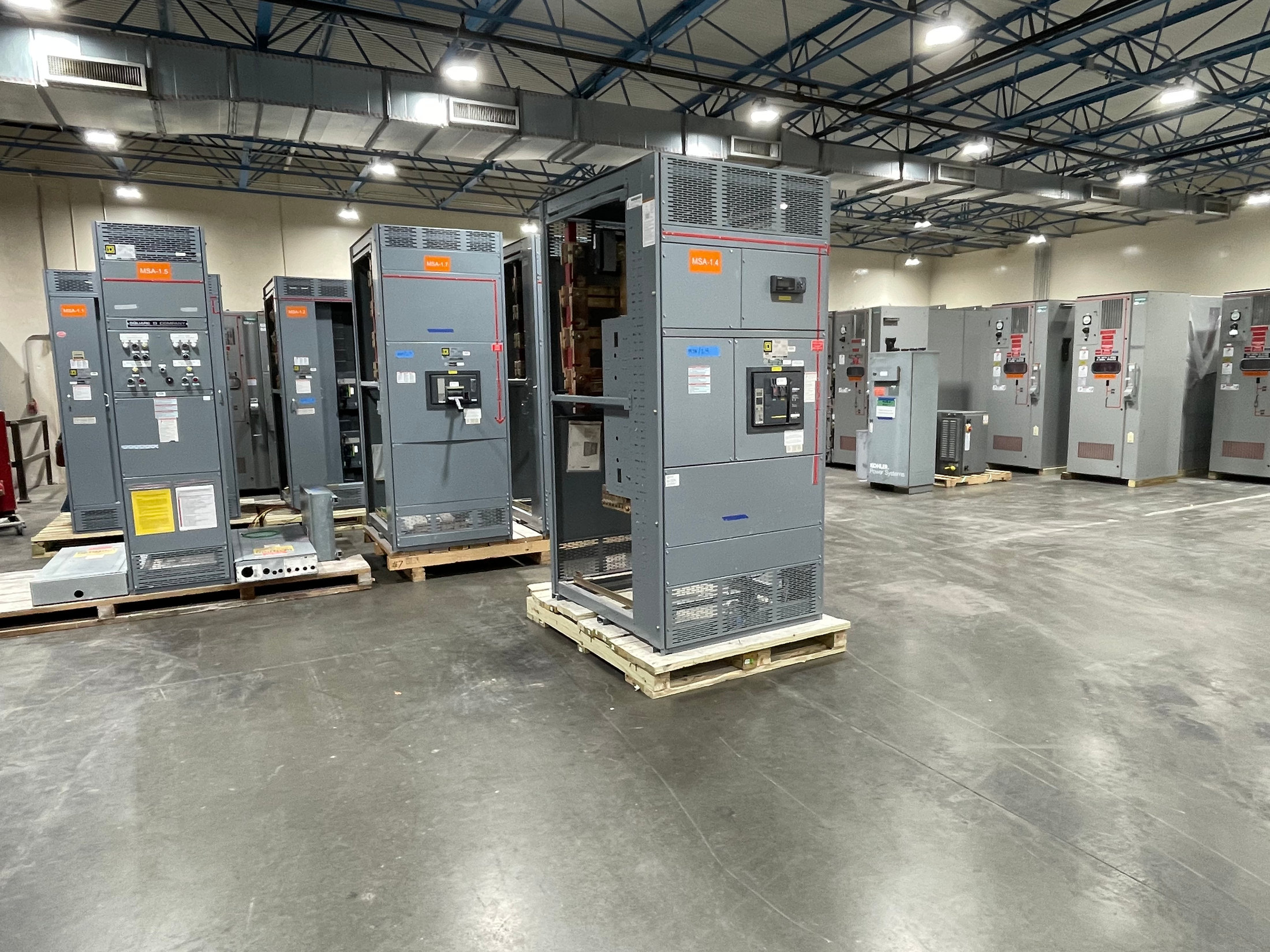
A straightforward way to sell surplus equipment
Have a used unit substation taking up space at a Pennsylvania property? We buy unit substations from facility owners, contractors, businesses, and others with equipment to sell. Whether the assembly is still at its former installation site or in storage, tell us what you have and where it is located.
We make cash offers and provide upfront payment. You do not have to test the equipment, arrange its removal, or find a freight company. We handle all cranes, rigging, disconnects, loading, freight, and hauling, so your role is limited to describing the equipment, sharing what you know, and getting paid.
What qualifies as a unit substation?
A unit substation generally combines incoming electrical equipment, a transformer, and outgoing distribution equipment in an integrated assembly. Depending on the installation, you may have a complete lineup or only some of its sections. Describe what is present rather than assuming everything must be together to be considered.
We buy all voltage classes, including used assemblies from commercial and industrial properties. We also buy switchgear from decommissioned data centers and shut-down power plants. If the equipment is part of a larger electrical inventory, include the related items in your initial description so we can consider the whole opportunity.
Start with the equipment you can identify
Tell us the manufacturer, model, approximate age, and number of assemblies or sections, if known. Note whether you have a transformer, primary switchgear, secondary switchgear, breakers, or other associated components. Mention whether the equipment is indoors, outdoors, installed in a building, or already stored for removal.
Photographs of the overall lineup and its readily visible sections can help us understand the configuration and estimate the scope of removal. You do not need a complete technical inventory to start; an approximate description and the information already available are useful.
Share accessible nameplates and ratings
If nameplates are visible without opening or moving anything, send clear photographs or transcribe the details you can read. Useful information may include manufacturer, model, serial number, transformer kVA, primary and secondary voltage, phase, and frequency. Switchgear or breaker ratings shown on accessible labels can also help identify the assembly.
Do not open enclosures, remove covers, dismantle components, or approach inaccessible equipment to gather information. If a label is missing, unreadable, or not safely accessible, simply say so. Existing drawings, equipment lists, or records can also be shared, but you do not need to produce new measurements or test results.
Describe condition honestly, without testing
Tell us what you already know about the equipment's history and visible condition. For example, mention damage, corrosion, missing sections, signs of leakage, or whether the assembly has been exposed to weather. If it has been in storage for years or its operating history is unknown, that context is helpful too.
You are not required to energize, inspect internally, or test equipment for us. Share existing maintenance or fluid-related documentation if it is available, along with any known site hazards. Do not take samples or perform technical work to answer our questions.
Include your complete surplus inventory
A facility closure, renovation, or equipment replacement can leave more than one substation or a mix of electrical assets. Let us know how many lineups, transformers, and switchgear sections you want to sell, and whether they are in one location or spread across several Pennsylvania sites.
A simple list, existing asset register, or set of labeled photos can help distinguish similar units. Note which items are included in the proposed sale and which must remain on site. If quantities or details are uncertain, identify them as estimates so we can clarify the scope before an offer.
Explain the site and removal logistics
Share the Pennsylvania location, the equipment's general position on the property, and any known access constraints. Useful details include loading-area limitations, narrow routes, overhead obstructions, site operating hours, and scheduling restrictions. If equipment is in a basement, behind other machinery, or on an upper level, mention that early.
Let us know the site's contact and any established access or safety requirements. We handle the cranes, rigging, disconnects, loading, freight, and hauling; you do not have to hire those services or perform that work. We coordinate the removal plan around the information and access arrangements available for the site.
How the offer and payment process works
First, send a description, accessible nameplate information, photos, and the location. We review the equipment and removal requirements and may ask for clarification. Our offer reflects the particular equipment and circumstances, including the inventory, condition, and logistics; there is no promised price for every unit.
If you accept the offer, we arrange the removal details and provide payment upfront, before our removal work begins. You do not need to test, disconnect, load, or transport the equipment. We manage the work needed to take it away, leaving you free from the burden of organizing separate removal contractors.
Independent buyers serving Pennsylvania sellers
We are independent buyers, not a manufacturer or an authorized representative of any equipment brand. Manufacturer names and model details identify what you are selling; they do not imply an affiliation. Contact us with what you know about your used unit substation or switchgear to request a cash offer.