Decide whether to request an offer
If you are preparing to sell combination-starter motor control centers in Pennsylvania, start by deciding what equipment is available and what records can be shared. We buy used, surplus, and decommissioned electrical distribution equipment, including combination-starter motor control centers. An offer depends on review of the equipment and agreement on the sale; not every item will be accepted. You can evaluate an offer without testing the equipment. We do not require seller testing, and no one needs to energize or operate units for an initial review.
A useful first description separates confirmed information from gaps. Note whether the inventory is one center, several sections, or a larger group, and identify any known combination-starter units and associated control units. If records do not establish a detail, mark it unknown rather than infer it from another unit. This lets us consider the actual inventory while avoiding assumptions about identical internals, completeness, or condition. Acceptance remains subject to review and agreement.
Describe the inventory from existing records
Gather records already available, such as inventory lists, project documents, prior equipment schedules, or decommissioning records. They may help identify which items are combination-starter motor control centers, how the inventory is grouped, and which details are documented for particular sections or units. Preserve distinctions among entries when the records show different descriptions. A shared name or location alone does not establish that separate units have the same components or configuration.
You do not need to create a new technical assessment. A concise account of the known quantity, descriptions, and record coverage is more useful than unsupported precision. If a document describes only some sections, say which portions it covers and leave the rest unresolved. This makes it possible to discuss the sale on the evidence available without asking you to verify internal contents or perform work on the equipment.
Keep known details separate from unknowns
Combination-starter equipment can be represented differently across records, so describe each unit or group according to what its documentation actually says. Where available, note the stated starter combinations and control units, along with any recorded distinctions between sections. Do not extend one record’s description to the whole center unless the records support that scope. The goal is a clear inventory description, not a conclusion about whether the internals match.
When records are incomplete, identify the specific uncertainty: for example, whether a control-unit description is documented for every listed section, or whether a recorded grouping corresponds to the physical inventory. These are information gaps, not reasons to guess. We can review what is known and determine whether it supports an offer discussion. Any questions about technical condition or configuration belong with qualified parties; evaluating an offer does not require seller testing.
Share safely accessible information
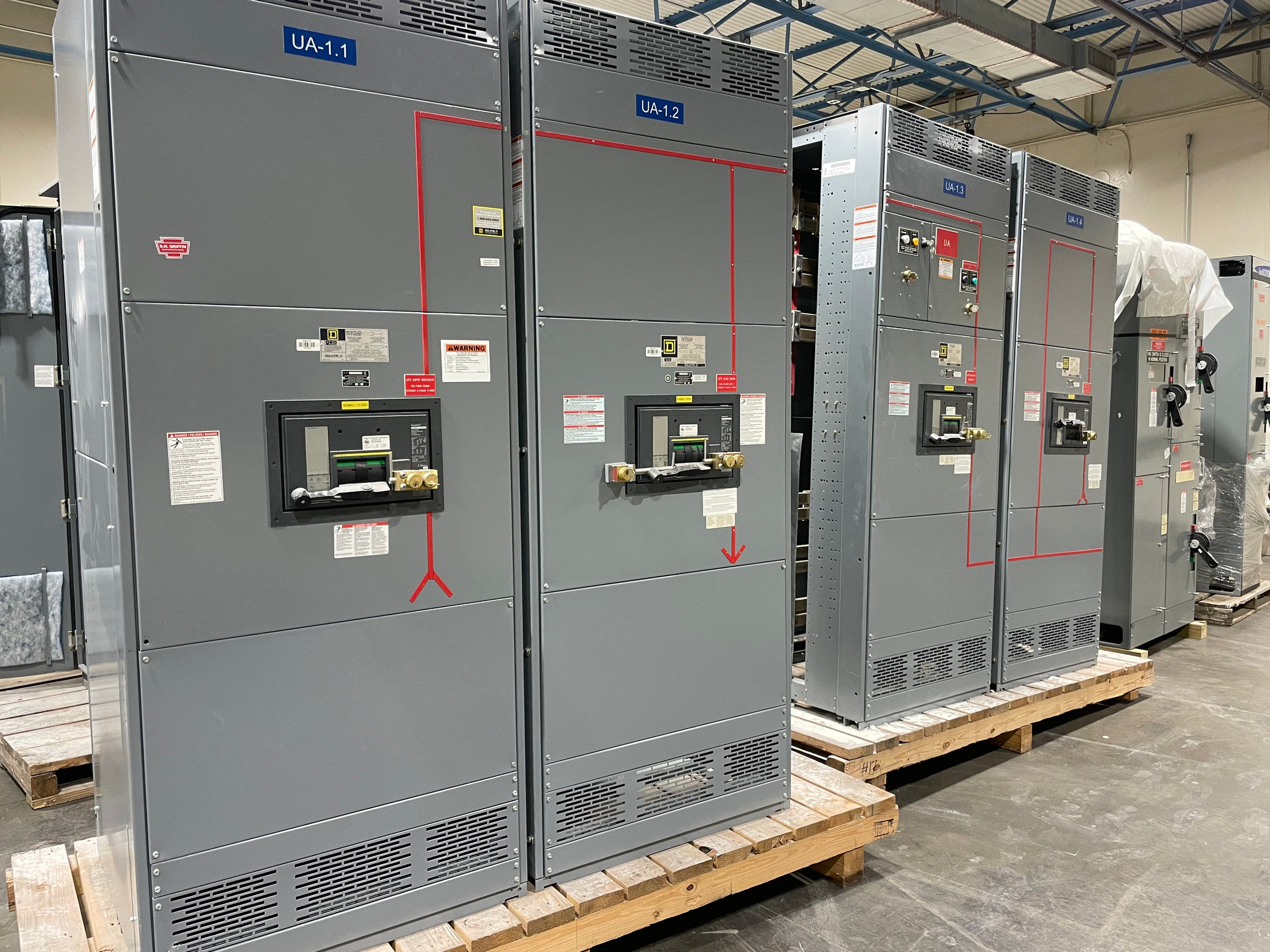
Existing photographs and labels may help distinguish items when they are already safely accessible. They are optional. Share only material you can obtain without opening equipment, approaching unsafe areas, moving components, or carrying out other physical work. A written description from existing records is also a reasonable starting point, especially when photographs are unavailable or do not show every section.
Owners control access to the equipment and decide what information can be shared. There is no need to disconnect, dismantle, handle, or test a motor control center to request consideration. If additional technical review is needed, it should be handled by qualified parties under the owner’s control. Keep any uncertainty visible in the description rather than treating an image, label, or neighboring unit as proof of details that are not documented.
Consider the equipment’s source and sale scope
We buy switchgear from decommissioned data centers and shut-down power plants, across all voltage classes. Combination-starter motor control centers may be part of a broader surplus or decommissioned equipment sale, but each item remains subject to review. If the inventory comes from a larger project, describe which centers or sections are included and which are outside the proposed sale. Clear boundaries help prevent confusion about what the offer discussion covers.
The source of the equipment can provide context, but it does not establish its present condition, completeness, or value. Likewise, a project record or facility description should not be treated as a substitute for item-level information when the inventory differs. Share what is documented about the equipment and its sale scope; leave technical conclusions to qualified parties. We assess the proposed inventory for a possible purchase rather than assuming every listed item will be accepted.
Review an offer without testing
You can review a cash offer based on the information available without testing the equipment. Seller testing is not required. We do not ask you to energize, operate, open, or otherwise inspect units for our initial consideration. The offer and any purchase depend on review of the equipment and agreement between buyer and seller, including agreement on the items covered by the sale.
Before deciding, compare the offer scope with your inventory description: which centers, sections, or units are included, and which details remain unknown? If a record applies only to selected equipment, keep that limitation clear in the discussion. An offer is not a promise that every combination-starter center or control unit will be purchased. You can decide whether the proposed terms fit the equipment and sale scope without undertaking testing or changing the inventory.
Coordinate payment and pickup
For equipment we agree to buy, payment is made upfront before pickup. We handle cranes, rigging, disconnects, loading, freight, and hauling as part of coordinating the pickup. The seller does not need to arrange those handling and transportation tasks. Pickup planning follows agreement on the equipment being sold and coordination with the owner regarding access.
Keep the sale scope and access arrangements aligned as pickup is planned. The owner retains control of the site and equipment access, while we coordinate the stated handling and transportation work for purchased equipment. No physical preparation by the seller is needed for an initial offer review. If the inventory changes or available records clarify which combination-starter units are included, update the sale discussion so the agreed equipment remains clearly identified.