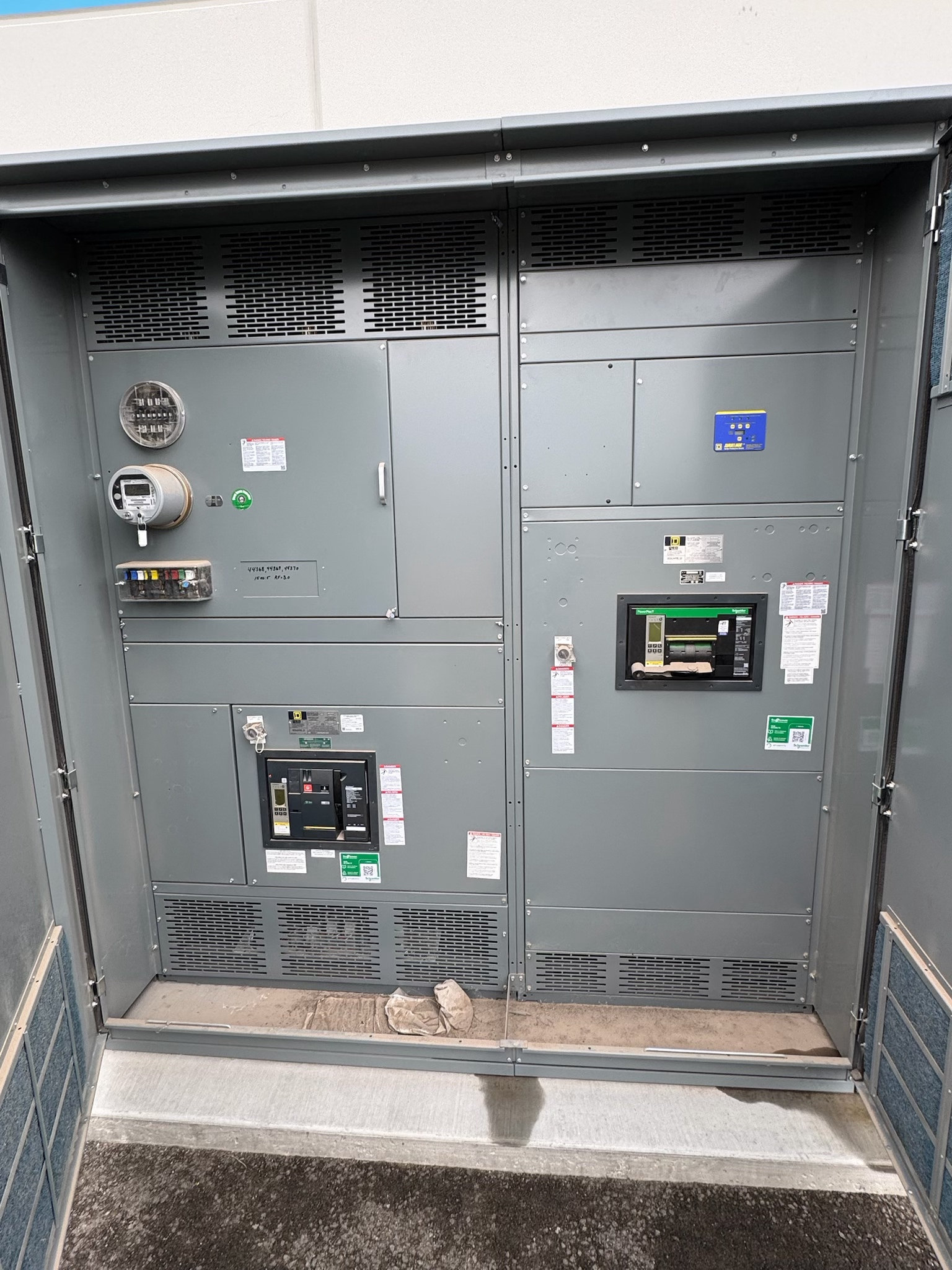
Start with ownership and sale authority
A sale begins with a clear answer to two questions: who owns the low-voltage power circuit breakers, and who is authorized to represent that owner? This matters when breakers are part of a plant closure, facility transition, surplus release, or equipment disposition. Identify the owner and the person coordinating the sale, then confirm that the breakers are included in the property being offered. If another organization controls the equipment or the release decision, establish its approval before discussing a transaction.
Define the boundary of the proposed sale before assembling an inventory. Breakers may be offered on their own or as part of a larger electrical-equipment lot; state which arrangement applies and whether the equipment is being offered for sale. Clarify whether the inventory covers all breakers in a designated group or only selected units. A defined scope helps prevent confusion over ownership, excluded equipment, and what a buyer’s offer would cover. Acceptance remains subject to review and agreement on the equipment and sale terms.
Build an inventory by breaker
Create one inventory entry for each breaker, or identify groups only where the units are clearly alike and can be distinguished later. Record the manufacturer and any family or type marking that is already visible, along with frame and trip markings when readable. Include identifying labels or catalog text as written rather than interpreting unfamiliar codes. Keep confirmed information separate from details that are unreadable, absent, or not known. This gives a buyer a grounded description without turning guesses into specifications.
A useful inventory also records quantity and the location or group in which the breakers are held, using the owner’s existing records where possible. If a unit’s identity is uncertain, describe the uncertainty and keep that unit separate from confidently identified items. Do not assume that breakers sharing a cabinet, appearance, or broad family name have the same configuration or value. The purpose is to establish what is being offered and how each item is identified, not to make a technical determination about its condition or suitability.
Record mounting and included accessories
For each breaker or clearly defined group, note the mounting arrangement as identified by existing records or visible markings, such as whether the breaker is described as drawout or fixed-mount. If the arrangement is not known, mark it unknown rather than inferring it from the surrounding equipment. This information can affect how a buyer understands the lot’s scope, but it should remain a descriptive inventory detail, not a conclusion about compatibility or interchangeability.
State whether loose accessories are included, excluded, or not yet accounted for. Describe them by visible label or owner inventory description, and associate them with a breaker only when that relationship is known. Avoid implying that a loose part belongs to a particular unit merely because it is nearby. A clear separation between breaker inventory and accessory inventory reduces later disagreement about what is covered by an offer and what will remain with the owner.
Distinguish facts from unknowns
An honest inventory is more useful than a long description built from assumptions. Separate information confirmed by readable markings or owner records from information that is uncertain. For example, a family label may be readable while the frame marking is obscured; record the readable family and identify the frame as unknown. If trip information is missing or cannot be read, say so. Avoid supplying ratings, dates, condition conclusions, or other details unless the owner can support them.
Photographs and label images are optional and may help clarify an inventory when they are already safely accessible. Owners control access to the equipment. There is no need to open, move, disconnect, energize, dismantle, or otherwise handle a breaker to prepare a description for buyer review. Seller testing is not required: we do not require or perform testing as part of this purchase process. Technical evaluation and any necessary handling belong to qualified parties under the owner’s control.
Define the lot and coordinate review
Once ownership, quantity, identifiers, mounting notes, and accessory scope are assembled, send the inventory for review as a proposed sale. Explain any grouping, exclusions, or unresolved ownership questions plainly. If the breakers are part of a broader surplus or decommissioning disposition, distinguish the breakers included in this offer from other equipment. We buy used, surplus, and decommissioned electrical distribution equipment, including switchgear from decommissioned data centers and shut-down power plants, across all voltage classes; each proposed purchase still depends on review of the particular equipment.
We buy equipment rather than arrange a sale on the owner’s behalf. A cash offer may be made after review, but an offer is not guaranteed for every item. The parties must agree on the equipment and transaction before a sale proceeds. Confirm the final inventory and included accessories against that agreement so the scope is understood by both sides. This review-first approach keeps a breaker’s markings and known details connected to the actual lot being considered, without treating an inventory description as a technical approval.
Payment, pickup, and equipment logistics
For an agreed purchase, payment is made upfront before pickup. The owner and buyer should confirm the sale scope and payment arrangement before collection is scheduled. We handle cranes, rigging, disconnects, loading, freight, and hauling as part of coordinating pickup. These logistics are coordinated around the agreed equipment and the owner’s access requirements; the owner retains control of the site and access to the equipment.
The owner does not need to arrange seller testing or prepare breakers through technical work for us. Keep the inventory and the agreed sale boundary available to the people coordinating the transaction, and identify any items that are excluded or whose ownership remains unresolved. If the inventory changes before pickup, disclose the change so the parties can confirm whether it affects the agreement. Pickup and payment proceed only under the terms agreed for the equipment under review.