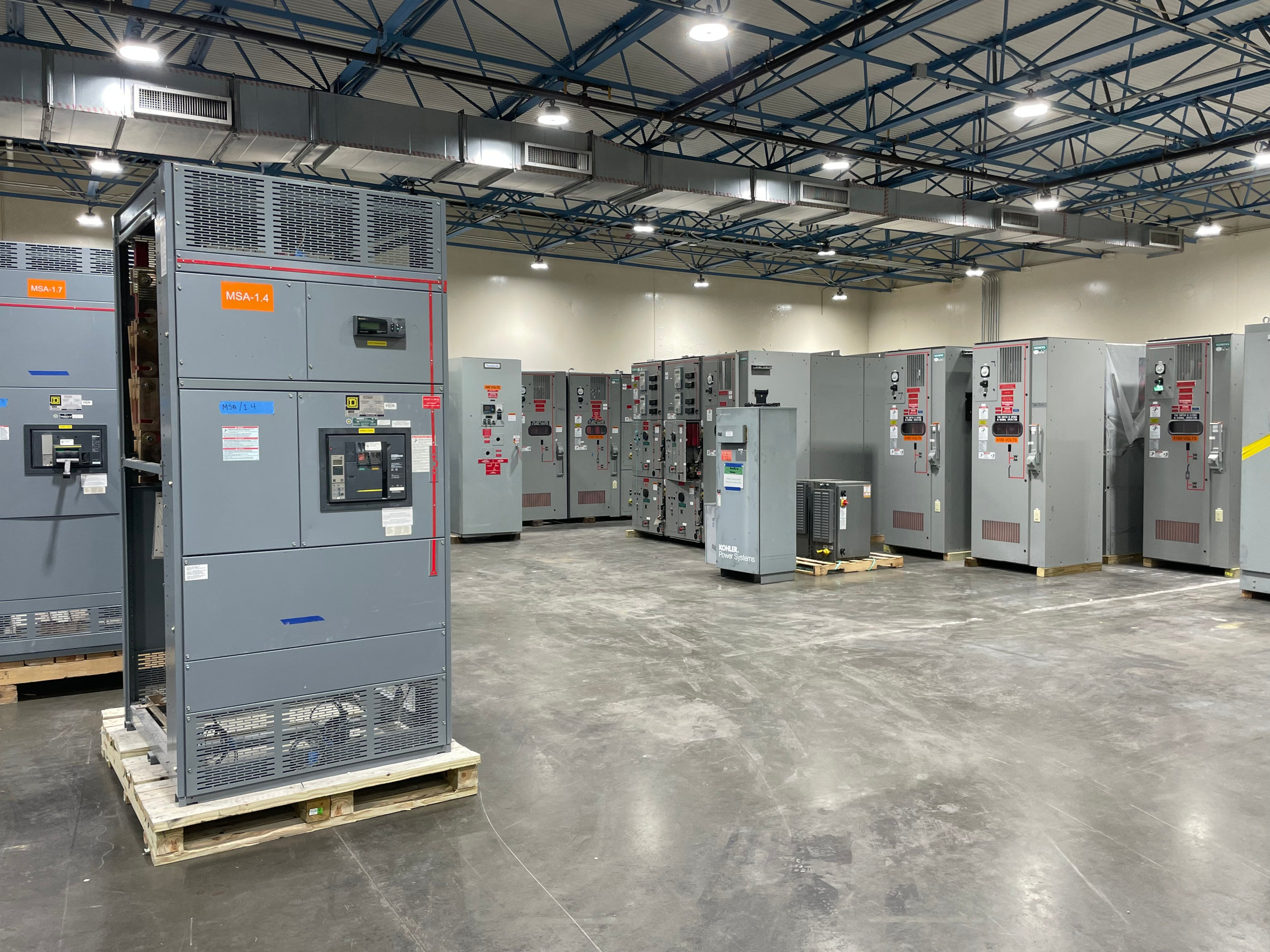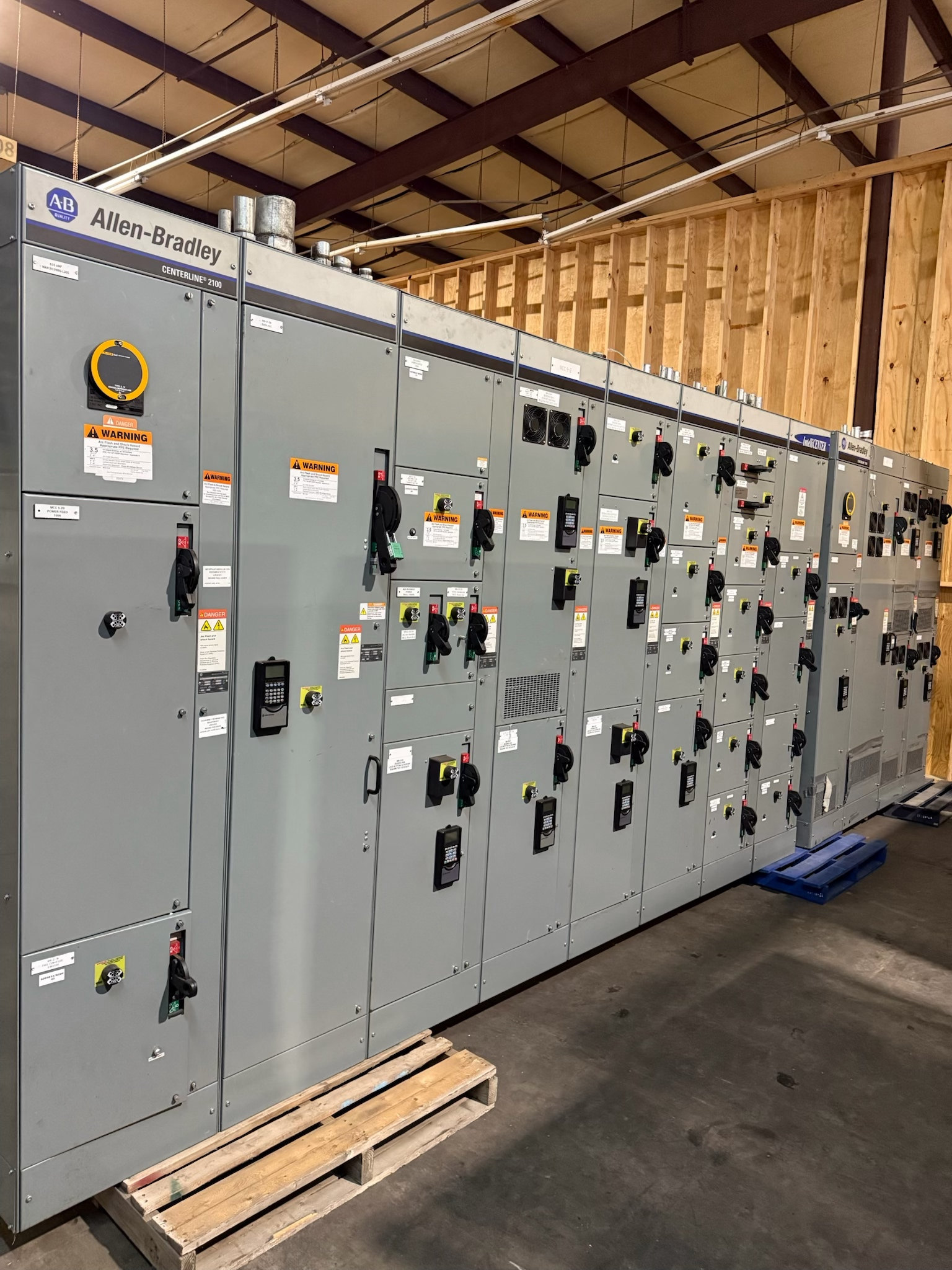
Sell low-voltage power circuit breaker switchgear in Pennsylvania
When a facility retires low-voltage power circuit breaker switchgear, the first sale question is often not its exact technical condition. It is what the owner intends to sell. An illustrative situation: a site plans to remove one switchgear lineup but retain a neighboring section, spare breakers, or associated distribution equipment. A clear boundary between sale assets and retained property helps the buyer review the intended package without treating nearby equipment as included.
We buy used, surplus, and decommissioned electrical distribution equipment in Pennsylvania, including low-voltage power circuit breaker switchgear. We make cash offers for equipment subject to review and agreement; not every item will necessarily be accepted. Payment is made upfront before pickup. No seller testing is required. We handle cranes, rigging, disconnects, loading, freight, and hauling, with access and work coordinated with the owner.
Distinguish the assembly from its breakers
A switchgear assembly nameplate and an individual power circuit breaker nameplate identify different items. The assembly plate may help establish the manufacturer’s classification for the lineup, while breaker plates identify particular devices within it. One does not automatically establish the identity or details of the other. Keeping these records separate avoids presenting an assembly designation as though it applied to every breaker, or assuming a breaker’s identification fully describes the assembly.
For an initial review, share what is already known about the lineup manufacturer or classification and, separately, the identities of its main and feeder devices. If a nameplate or record is unavailable, mark that information as unknown rather than infer it from appearance or adjacent equipment. Photos and label details are optional, and should be provided only when already safely accessible. The owner controls access; no one needs to open equipment or conduct a physical inspection for a preliminary inventory discussion.
Describe main and feeder devices accurately
A main device and feeder devices can be significant parts of the equipment package, but their roles should be recorded as the owner understands them, not guessed from position or labels on other components. Note which breakers are believed to be the main and which are believed to serve feeders, and identify any uncertainty. If the available records do not resolve a device’s role or identity, leaving it unresolved is more useful than assigning a confident but unsupported description.
The buyer can review the proposed equipment and the information supplied, then determine whether to make an offer for some or all of it. That review is not a substitute for technical evaluation by qualified parties. It does not require the seller to test, energize, open, disconnect, dismantle, or handle equipment. Any technical assessment needed for the facility’s own decisions remains with parties qualified and authorized for that work.
Set a clear sale boundary
In the illustrative retirement, the owner might intend to sell the lineup and identified breakers while keeping spare devices, nearby panels, or other electrical assets. Describe the included equipment and the retained property separately. Reference the intended lineup or area in terms the owner can safely confirm, and identify known exclusions plainly. This prevents an offer discussion from inadvertently treating all visible equipment in a room or adjacent lineup as one sale lot.
The same distinction matters when records group several sections together or when an assembly contains devices the owner does not intend to sell. State whether the proposed sale covers the full assembly, a defined portion, or selected devices, to the extent known. Do not assume that a shared manufacturer, room, or system association makes separate property part of the transaction. Final scope depends on review and agreement between the buyer and owner.
Separate known facts from unknowns
A concise inventory can distinguish confirmed information from items awaiting clarification. Confirmed details may include the manufacturer identification shown on an assembly nameplate, device identifications already recorded, and the owner’s intended sale boundary. Unknowns may include missing plate information, uncertain breaker roles, or whether a particular device belongs with the assembly. This distinction helps the buyer assess the proposed package without turning an incomplete record into an unsupported technical claim.
The inventory need not establish ratings, compatibility, operating condition, or suitability. Do not derive those facts from a brand name, visual resemblance, or another device’s plate. Where a qualified party has documented information, it can be attributed to that record; otherwise, describe the point as unknown. Acceptance remains subject to review, and any offer depends on the equipment and the agreed sale scope.
Coordinate the sale and pickup
Once the proposed assets are identified, the owner and buyer can coordinate access and pickup around the property boundary and site requirements. We handle cranes, rigging, disconnects, loading, freight, and hauling. The owner controls site access and identifies retained property; coordination should make clear which equipment is included and which items must remain untouched. No seller testing is needed to begin the sale discussion.
We provide cash offers for equipment we are prepared to buy, with payment upfront before pickup. The transaction proceeds only when the parties agree on the equipment and terms. This approach keeps the sale focused on the identified low-voltage power circuit breaker switchgear and avoids implying that every breaker, assembly, or associated item will receive an offer.
A focused review for switchgear owners
For a Pennsylvania owner considering a retirement or surplus sale, useful starting information is the intended sale boundary, what is known about the assembly manufacturer classification, and separate identification of main and feeder breakers where available. Clearly flag unknowns and retained property. Optional photos or labels are helpful only if already safely accessible; they are not a reason to open or handle equipment.
We buy electrical distribution equipment, including low-voltage power circuit breaker switchgear, with acceptance subject to review and agreement. The owner does not need to test the equipment. If the proposed package is accepted, payment is upfront before pickup, and we handle cranes, rigging, disconnects, loading, freight, and hauling. The owner retains control of access and of any property excluded from the sale.