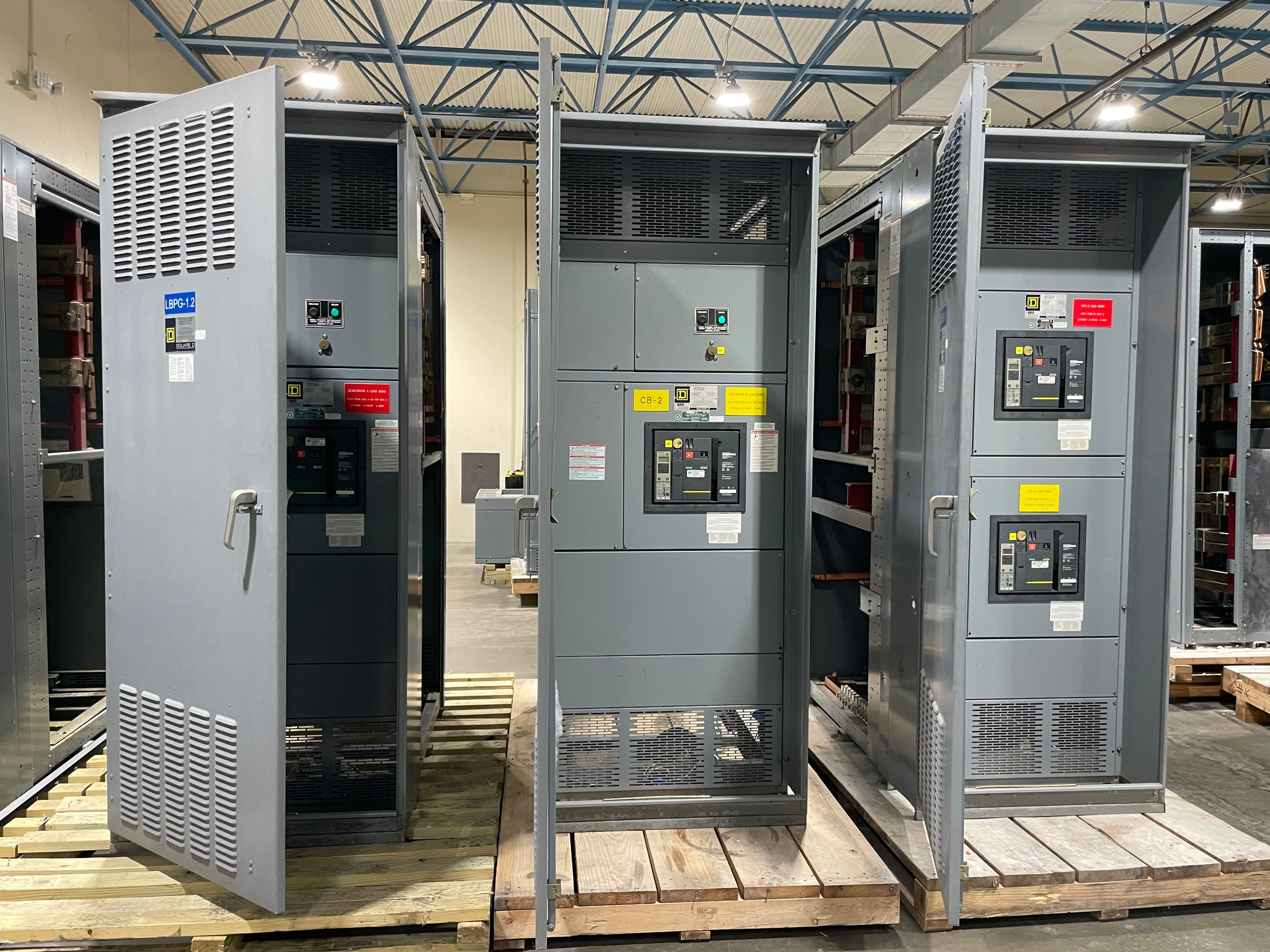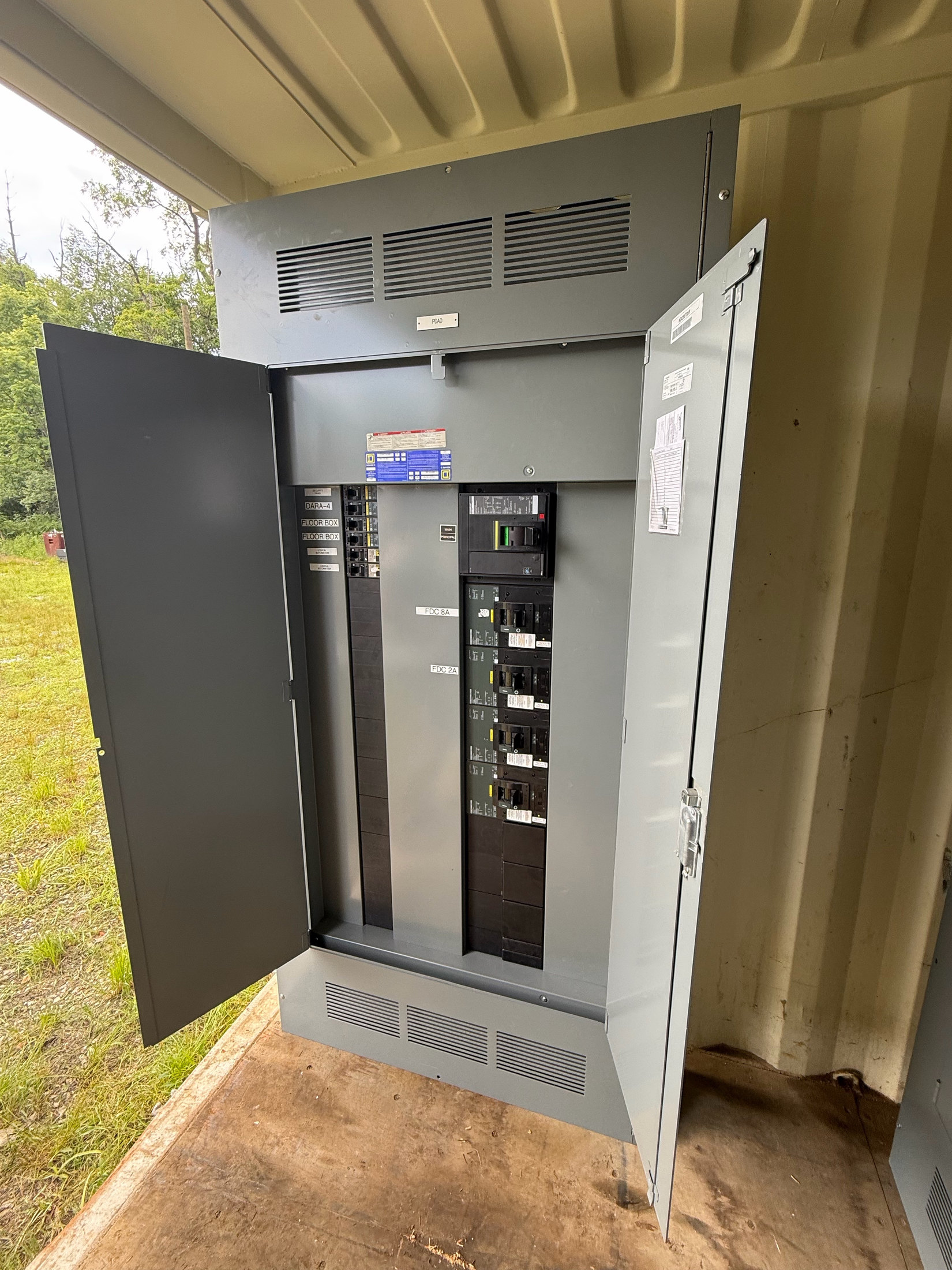
Inventory the Cooper Power nameplate first
For a Pennsylvania sale, begin with the markings that identify the equipment as Cooper Power series switchgear. Record the wording exactly as it appears on nameplates and labels already safely accessible, including any manufacturer name, product-family designation, catalog or serial identifiers, and dates where shown. Cooper Power is a product-family identifier; a name alone does not establish the equipment’s age, configuration, condition, or suitability for a particular application. Preserve uncertain or partially legible text as uncertain rather than filling in missing details.
Inventory the complete assembly rather than treating the nameplate as the whole item. Note visible sections, associated enclosures, and accessories that are present, along with quantities when they can be established without handling equipment. Separate items that are clearly part of the assembly from nearby equipment whose ownership or relationship is unclear. A concise inventory helps us understand what is being offered and what remains unidentified before discussing a possible cash offer.
Separate documented history from assumptions
Manufacturer and product names may reflect changes over time. If available records identify a manufacturer, successor name, or historical relationship for a particular unit, retain the document and describe what it actually establishes. Do not infer a manufacturing date, ownership history, or exact product lineage from a Cooper Power marking alone. When records are missing or conflict with the visible label, report that gap; the unresolved history can be considered alongside the physical inventory.
Useful records may include existing asset registers, purchase or maintenance documents, prior inventory descriptions, and photographs already held by the owner. Share only information you can substantiate, and distinguish a recorded fact from an estimate or recollection. We can review supplied descriptions and available documentation, but we do not perform seller testing or ask owners to energize, open, disconnect, dismantle, or physically handle equipment to establish its identity.
Describe the assembly and its accessories
For each identifiable section, capture the label wording, visible arrangement, and any stated identifiers without extrapolating beyond them. Describe whether the offer covers one section, a larger assembly, or multiple associated items. If an accessory is included, identify it separately when its markings or existing records allow; if its function or relationship to the switchgear is unknown, say so. This gives a clearer account of the offered scope than a broad description such as “complete gear.”
Record what is visibly present and what is absent from the available inventory. For example, distinguish accessories documented as included from items merely believed to be associated, and note when a quantity cannot be confirmed. Avoid assigning electrical ratings, operating characteristics, compatibility, or completeness based on appearance or family name. Those details should be stated only when supported by the equipment’s own documentation or legible markings, and any remaining unknowns should stay explicit.
Use safe, optional information
Photos are optional and useful only when they already exist or can be taken from a safe, readily accessible position under the owner’s control. A clear view of existing nameplates and the overall assembly can help us compare a written inventory with the offered equipment. Do not enter restricted areas, approach exposed hazards, remove covers, or reposition items to obtain images. If a label cannot be read safely, provide the wording you can confirm and identify the rest as unreadable or unavailable.
The owner controls access to the site and the equipment throughout the inquiry. We do not require a seller to test the gear, energize it, open it, disconnect it, dismantle it, or move it for inspection. Describe known access constraints and whether the equipment is located within a larger decommissioned installation, such as a data center or shut-down power plant, only when that context is accurate and relevant. Do not treat site context as proof of a particular model, rating, or condition.
Clarify scope before a cash offer
A useful offer discussion starts with the exact Cooper Power markings, an assembly-level inventory, included accessories, and any reliable records. It also accounts for what is unknown: unreadable identifiers, unconfirmed quantities, uncertain accessory relationships, or incomplete history. We buy used, surplus, and decommissioned electrical distribution equipment, including switchgear across all voltage classes. That scope does not mean every item or configuration will be purchased; any offer depends on the equipment and the details available for review.
We make cash offers for equipment we agree to buy. The offer and sale terms are discussed with the seller before pickup, and payment is made upfront before pickup. A submitted inventory does not itself create a purchase commitment. Keep the proposed scope clear so both sides understand which sections and accessories are included, which items are excluded, and which details remain unresolved when considering the sale.
Coordinate pickup and material handling
For equipment we agree to purchase, we handle cranes, rigging, disconnects, loading, freight, and hauling as part of pickup coordination. The seller need not arrange those services or conduct equipment testing for us. The owner remains in control of site access and coordinates the conditions under which the equipment can be collected. Share known site restrictions and any available information relevant to planning access, without undertaking physical preparation or altering the equipment for the inquiry.
Pickup planning follows agreement on the equipment being sold and the sale terms, including upfront payment before pickup. Keep the inventory aligned with the actual agreed scope, particularly where a Cooper Power-marked section is part of a larger assembly or where accessories are separately identified. If a component’s inclusion, identity, or connection to the offered assembly is uncertain, resolve that point in the description before finalizing what the sale covers.
Keep the record useful and bounded
A sound sale record distinguishes visible markings, documented facts, seller observations, and unresolved questions. Preserve label text as written, identify the source of historical information when known, and avoid converting an old inventory description into a verified specification. Where records use a different manufacturer name, retain that wording and explain only the documented relationship to the Cooper Power designation. This makes the product-family identification useful without overstating what the available evidence proves.
Send the inventory and relevant existing documents for review when considering a Pennsylvania sale. We can discuss whether the described equipment is of interest and, if so, make an offer based on the equipment and agreed scope. No seller testing is needed. When a purchase is agreed, payment is upfront before pickup, and we handle cranes, rigging, disconnects, loading, freight, and hauling.