Sell G&W Electric Distribution Switchgear in Pennsylvania
If you are preparing a Pennsylvania sale of G&W Electric distribution switchgear, begin by identifying what is actually included. A complete assembly and a group of loose components can carry the same manufacturer name while representing very different sale scopes. We buy used, surplus and decommissioned electrical distribution equipment, including G&W Electric switchgear across all voltage classes. We make cash offers when the equipment and proposed sale are a fit; an offer is not assured for every item.
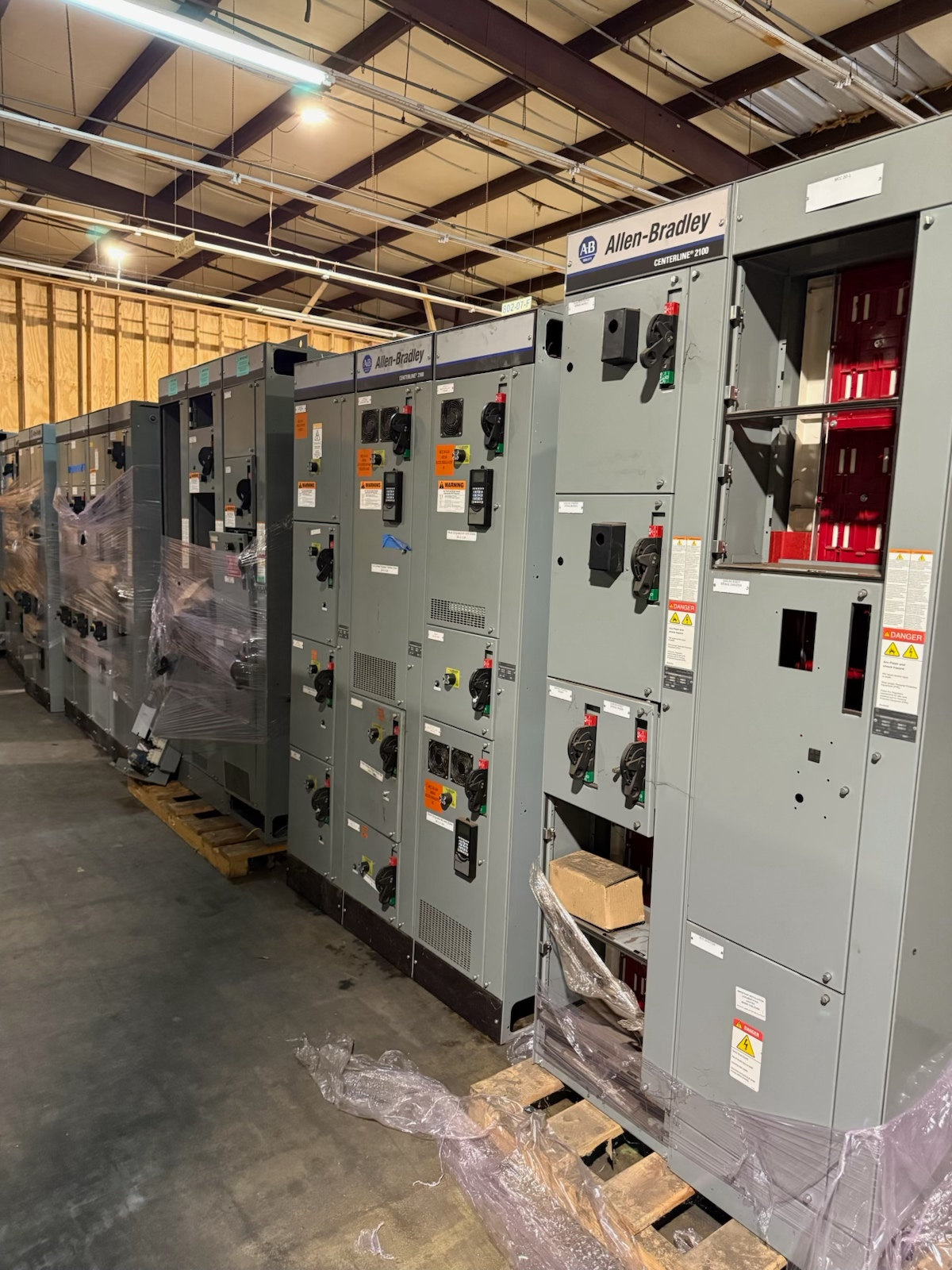
For example, an owner reviewing equipment from a shut-down power plant may find a marked switchgear lineup beside crates of separately stored parts. Treat those as distinct inventory entries until their relationship is documented. A visible brand mark helps identify equipment, but it does not establish that loose parts belong to a particular assembly, that an assembly is complete, or that components are interchangeable. Clear descriptions let us assess the proposed scope without assuming those details.
Identify Assemblies and Loose Components Separately
Describe each apparent assembly as an assembly, and list loose components separately. If a group of items was stored together, say so without presenting storage proximity as proof that the items form one set. Record visible manufacturer and product markings as written, along with any identifiers that are already safely accessible. Product-family names can help distinguish one G&W Electric distribution switchgear offering from another, but a name alone does not establish configuration, condition, included parts or technical suitability.
Where documents are available, inventory records, equipment schedules, purchase records or other existing paperwork may help define what is offered. Keep documented facts separate from unresolved points: for example, note that a lineup is identified in a record while its completeness is unknown. Do not infer ratings, compatibility or construction from appearance or branding. Owners control access to the equipment; photographs or label details are optional and should only come from material already safely accessible.
Document What Is Known
A useful description can state the number of apparent assemblies, the location or storage context in general terms, and which loose items are included in the proposed sale. Add markings or product-family references only when they can be read from existing records or safely accessible labels. If records identify a designation, reproduce it carefully rather than translating it into a technical claim. If the exact product family, internal arrangement or completeness cannot be established from available information, leave that point unresolved.
Condition statements should also follow the evidence on hand. Existing maintenance or inventory records may describe history, but they are not a substitute for an inspection or a guarantee of present condition. We do not require seller testing. Do not energize equipment, open enclosures, dismantle assemblies or handle components to prepare an inquiry. A straightforward account of what is documented—and what remains unknown—supports a realistic discussion while keeping the sale scope clear.
Confirm Authority and Proposed Scope
Before arranging a sale, confirm that you have authority to sell the equipment and to include each item in the proposed scope. For a facility closure, surplus disposition or equipment held on behalf of an organization, identify the person or entity authorized to approve the transaction. Separate equipment owned by different parties, and distinguish items offered for sale from items that are merely nearby or excluded. This matters especially when an assembly and loose components have different ownership or inventory records.
A buyer discussion can then address the identified G&W Electric equipment, its documented markings, the available records and the distinction between complete assemblies and loose inventory. Share known limitations in the description rather than filling gaps with assumptions. We assess equipment based on the information and sale scope presented; whether we make an offer depends on the equipment and the proposed transaction. Agreement on what is included is essential before pickup coordination.
Plan a Sale Without Seller Testing
The seller does not need to test the switchgear for a sale discussion. Do not energize it, open it, disconnect it, dismantle it or physically move it to create information for us. If markings or photographs are already safely accessible, they may help identify the equipment, but providing them is optional. Owners remain in control of access and facility conditions. We can discuss the proposed inventory using available descriptions and documentation without asking the seller to perform technical work.
That approach is useful when a decommissioned data center or shut-down power plant has retained records but no practical basis for seller testing. Existing documents can identify a manufacturer or product family, while the actual configuration, completeness or condition may remain unknown. Keep those categories separate. A label identifies what it says; it does not, by itself, confirm performance or compatibility. The sale conversation should rely on documented facts and an agreed scope, not on assumptions or newly performed tests.
Coordinate Removal and Payment
For an agreed purchase, payment is made upfront before pickup. We handle cranes, rigging, disconnects, loading, freight and hauling as part of pickup coordination. The parties can define the included equipment and coordinate access and removal arrangements for the agreed sale. Sellers are not asked to perform disconnects, loading or hauling as a condition of obtaining a discussion or offer; our team handles those logistics for equipment we purchase.
Clear inventory is particularly important for mixed lots. If a marked assembly is offered with loose components, state which components are included and keep excluded items distinct. If the relationship between parts and assembly is undocumented, describe that uncertainty plainly. A proposed purchase remains subject to agreement on the equipment and scope; payment and pickup follow an agreed transaction. No offer is guaranteed, and not every item will necessarily be a fit for purchase.
Discuss Your G&W Electric Inventory
To start, describe the G&W Electric distribution switchgear you are authorized to sell, separating assemblies from loose components and noting any product or manufacturer markings that are already documented. Summarize available records and identify unresolved details without estimating technical ratings or claiming compatibility. Optional photographs or label information should only be supplied when already safely accessible. This gives us a basis to review the inventory and determine whether an offer is appropriate.
Whether the equipment came from a data center, power plant or another Pennsylvania facility, the same distinctions help define the transaction: what is present, what documentation supports its identification, what is included, and who can approve the sale. If we agree to purchase, we provide a cash offer, pay upfront before pickup, and handle cranes, rigging, disconnects, loading, freight and hauling. The equipment and proposed scope determine whether a purchase can be agreed.