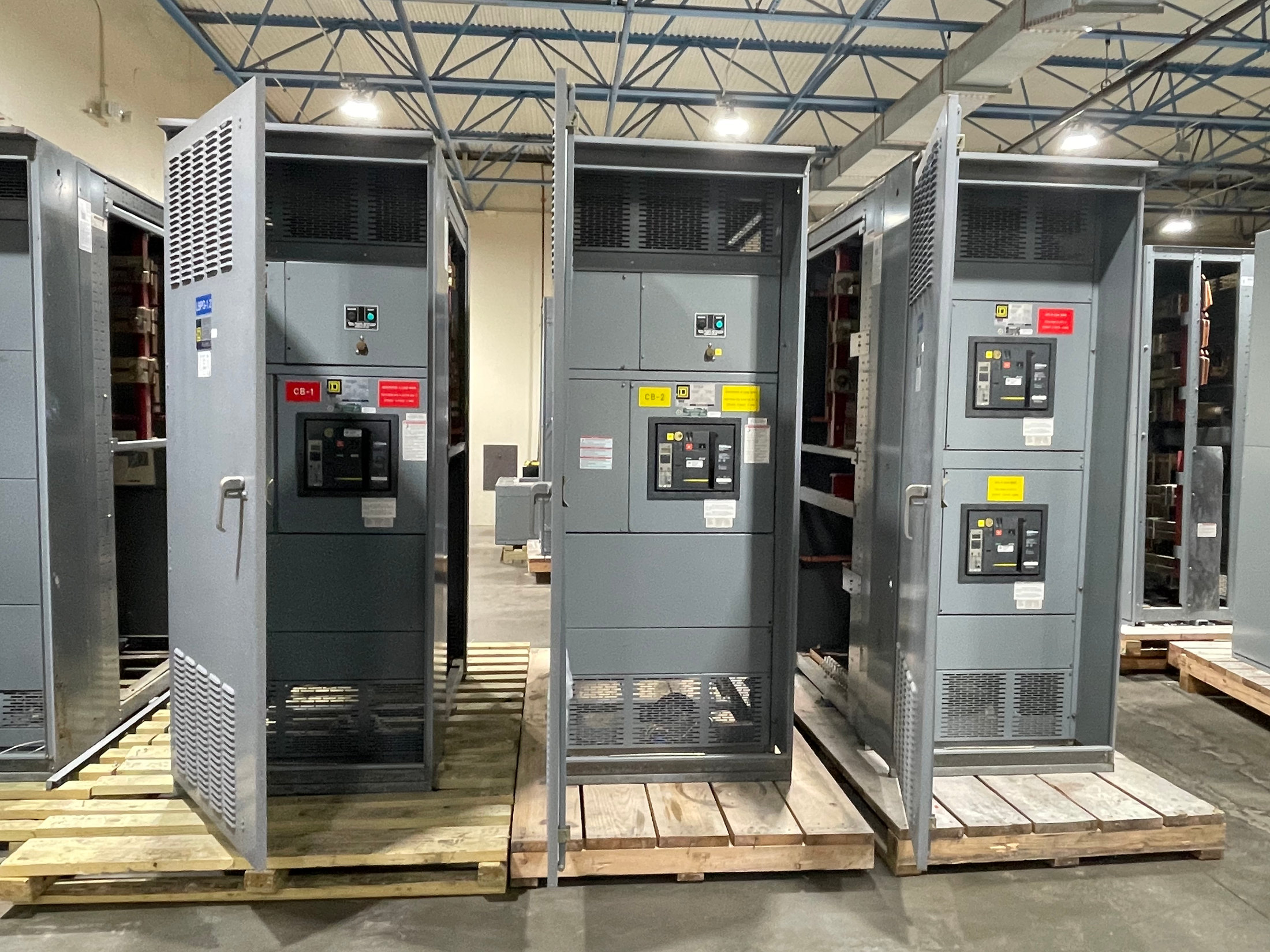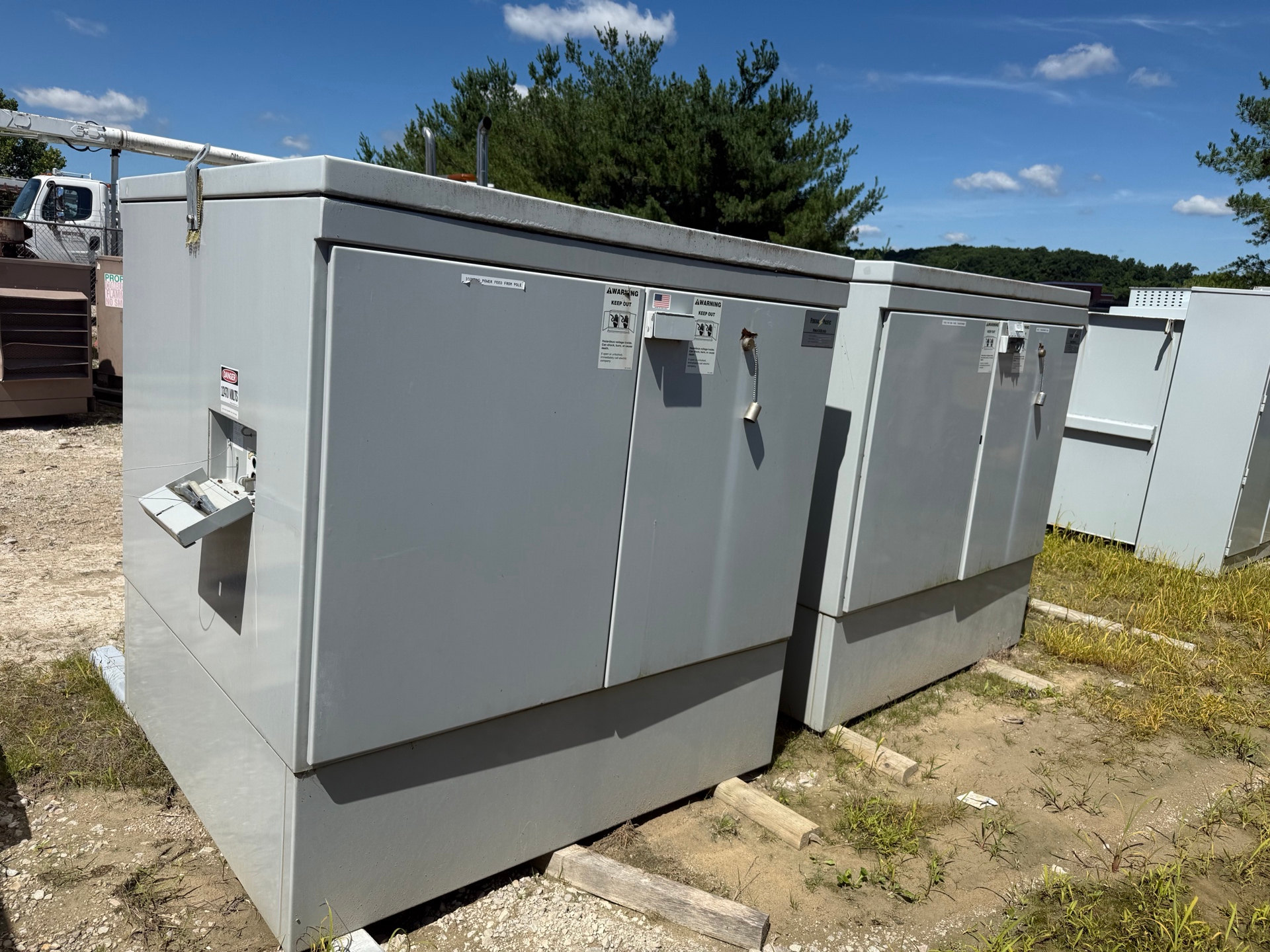
Selling Trayer medium-voltage switchgear in Pennsylvania
If you own Trayer medium-voltage switchgear in Pennsylvania, you can offer it for purchase as a single item or as part of a larger surplus lot. We buy used, surplus and decommissioned electrical distribution equipment, including switchgear from shut-down power plants and decommissioned data centers. A purchase depends on the equipment and an agreed scope; identifying the manufacturer and product family helps us understand what you are offering, but does not by itself establish that a purchase will proceed.
Start by distinguishing the Trayer equipment you control from other equipment at the site. That matters especially where switchgear sits in a utility area, serves shared infrastructure or remains associated with an operating facility. The owner or authorized representative needs to define the sale boundary and confirm that the equipment is available for sale. We do not treat nearby equipment, connected assets or utility-owned property as part of a seller’s lot without that authority and clear agreement.
Identify the equipment and the sale boundary
For a single Trayer item, describe it as specifically as you can using information already available to you: the manufacturer name, any visible product-family wording, and whether it is a complete lineup, a section or another identifiable assembly. An existing inventory record, drawing or photograph may help connect the item’s identity to the proposed sale. Do not open equipment or perform any inspection to gather details. If labels or photographs are not already safely accessible, they are optional; the owner controls access to the site and equipment.
For a mixed lot, separate the Trayer medium-voltage switchgear from other manufacturers, equipment families and associated materials in the inventory description. A lot can include items with different ownership, condition or sale status, so a broad description alone may not define what is being offered. Note which items are included, which are excluded and whether the Trayer equipment is being offered separately or only with the wider lot. This gives both sides a clearer basis for discussing scope without assuming that every item will be purchased.
Single item or mixed lot
A single-item offer centers on the identity and ownership of the specific Trayer equipment. Describe what the item is understood to be, where it sits within the site’s sale boundary and what records are available. If the description is incomplete, identify what is known and leave uncertain details unresolved rather than assigning an unverified configuration or rating. We can consider the information provided and discuss whether the item is suitable for a purchase offer.
A mixed-lot offer requires a broader account of the inventory. Include the Trayer switchgear as a distinct part of the lot, then describe other equipment at a level supported by existing records. Clarify whether a lot-level sale is required or whether individual items may be considered separately. This comparison matters when the Trayer equipment is clearly identified but other assets are not, or when the seller has authority over some site equipment but not all of it. The agreed purchase scope must identify what is included; the presence of a recognizable brand does not make an entire room or facility saleable.
What can be documented
Useful documentation can include existing inventory descriptions, ownership or sale-authority records, available site records, and photographs of labels or equipment only when already safely accessible. For Trayer switchgear, visible manufacturer or product-family wording can help distinguish the subject from other equipment in a mixed lot. Existing documents may also help establish whether the proposed sale concerns one item, several identified sections or a broader inventory. Share only information you are authorized to provide.
Keep documented facts separate from unresolved details. A record may identify Trayer as the manufacturer without stating the complete equipment scope; a photograph may show a label without establishing ownership of the surrounding assets. Voltage class, configuration, completeness, condition and associated components should not be inferred where the records do not establish them. We do not require seller testing, and sellers should not test, energize, open, disconnect, dismantle or physically handle equipment for the purpose of preparing an offer.
Ownership, utility boundaries and site access
At facilities with utility-owned or shared infrastructure, establish who owns the Trayer equipment and who has authority to include it in a sale. Site location alone is not proof of ownership. A seller may control a building or plant while utility assets remain outside the seller’s sale scope; likewise, an equipment label does not identify who can authorize its removal. Resolve the boundary through the records and authorized contacts available to the owner before treating adjacent equipment as part of the offer.
The owner controls site access and determines who may enter and when. Access for a potential purchase discussion does not authorize physical work on the equipment. Keep the proposed scope tied to assets the seller is authorized to offer, and identify any access restrictions or boundaries relevant to coordinating a future pickup. We can discuss the sale using the information supplied without asking the seller to perform technical inspection or handling.
Offer, payment and pickup coordination
We make cash offers for equipment we are interested in purchasing. An offer is not automatic: the equipment, documented scope and agreed sale terms determine whether a purchase can proceed. A single Trayer item can be considered on its own, while a mixed lot can be discussed as a defined group or by separate items. In either case, confirm the exact included equipment before accepting a sale agreement.
Payment is made upfront before pickup. We handle cranes, rigging, disconnects, loading, freight and hauling as part of pickup coordination, subject to the agreed equipment and site scope. The seller does not need to test the switchgear to prepare for an offer. Coordinate ownership, site access and the sale boundary through the authorized owner or representative so that pickup arrangements correspond to the equipment actually included in the agreement.
Keep the proposed lot clear
A concise offer description should make the Trayer medium-voltage switchgear identifiable, state whether it is a single item or part of a mixed lot, and explain what is known about ownership and sale authority. Note the records available and distinguish them from details that remain unknown. If the lot includes other equipment, identify it separately rather than relying on a general description of a room, plant or utility area. This supports a focused discussion without assuming a particular technical specification or purchase outcome.
When the seller’s authority, equipment identity or lot boundary is unclear, settle those points through existing records and the responsible owner before treating the assets as one sale. We buy used, surplus and decommissioned equipment across voltage classes, but each proposed purchase remains subject to the equipment and agreement. Clear scope lets us consider the Trayer item in context while keeping unrelated or utility-owned assets outside the proposed transaction unless their owner has authorized their inclusion.