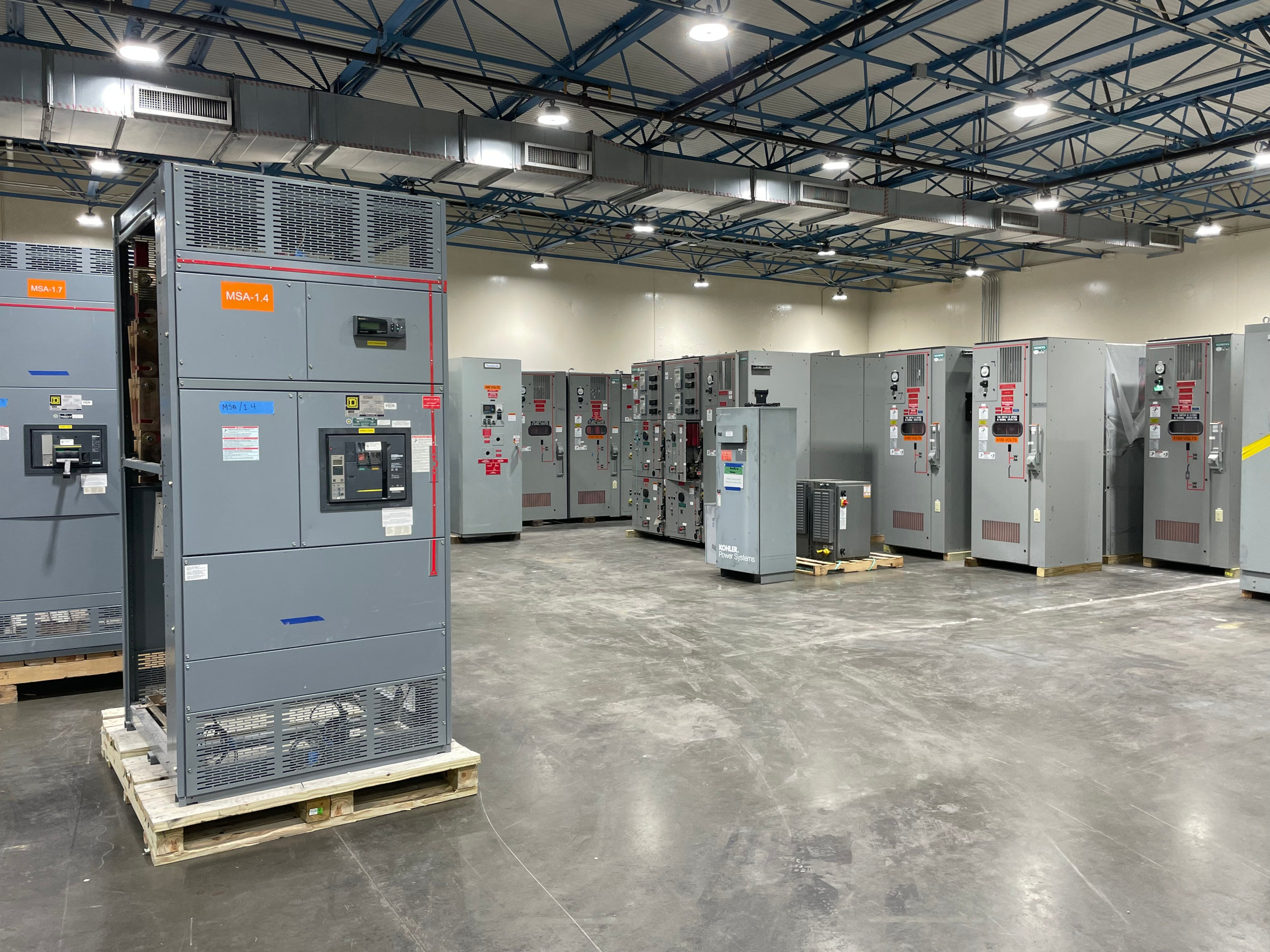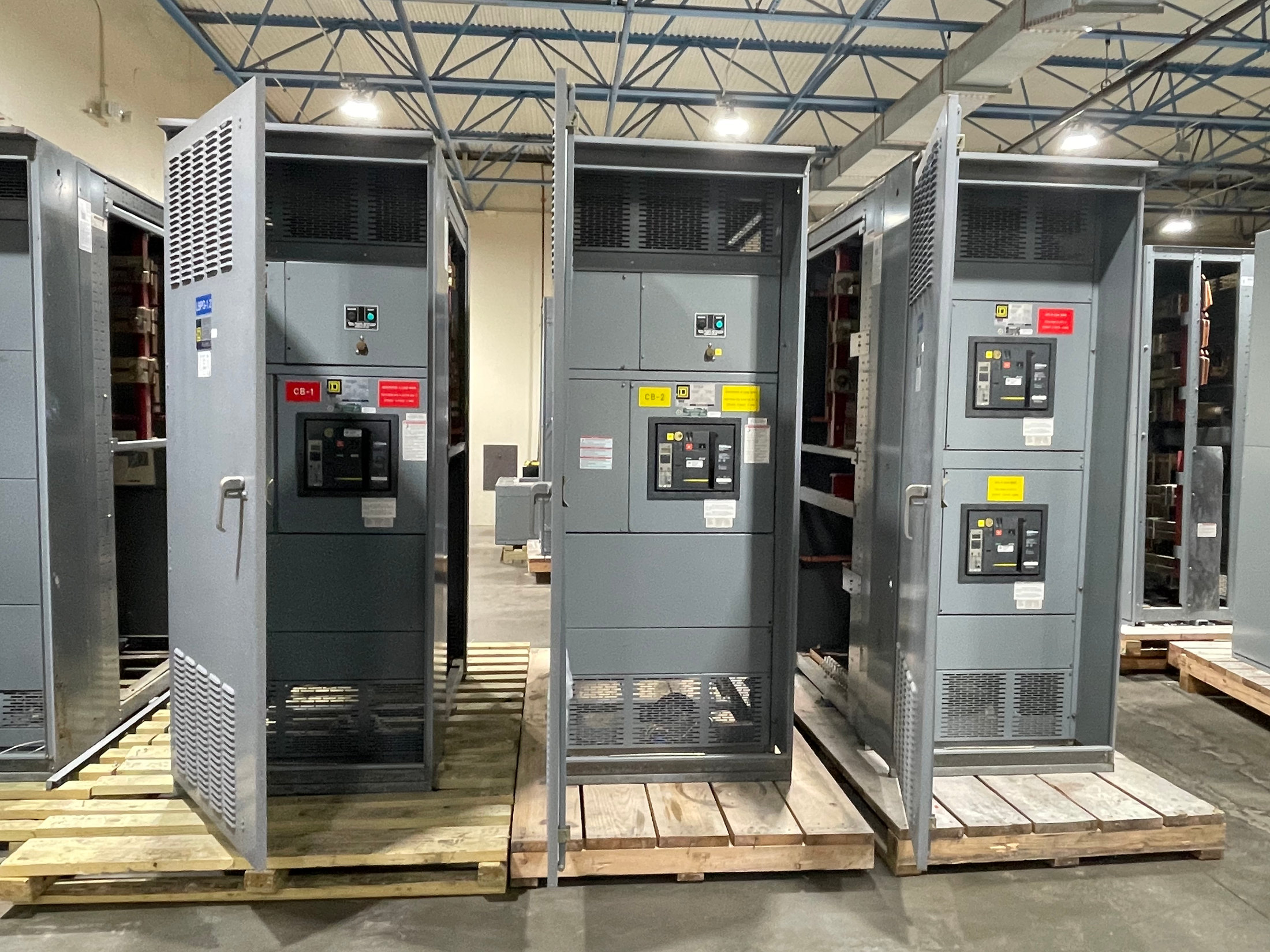
Decide What Equipment to Offer
If your facilities team is considering a sale in Grove City, start by identifying which electrical distribution equipment is available and who can authorize its sale. We buy switchgear and other used, surplus, and decommissioned electrical distribution equipment in Pennsylvania. A purchase is not automatic: an offer depends on the equipment, its condition, completeness, and whether the parties agree on the sale.
Separate complete switchgear assemblies from loose components in the inventory. A lineup or other assembly is different from individual breakers, control devices, relays, bus sections, or related parts; describe them as separate items rather than presenting loose components as a complete assembly. The distinction helps establish what is actually being offered without suggesting that a component is compatible with particular equipment.
Coordinate Inventory Across Electrical Rooms
When equipment is distributed across more than one electrical room, organize the information by room or area and identify each assembly and loose item separately. Note which pieces belong together only when that relationship is known. This gives the buyer a clearer picture of the proposed sale and helps the team coordinate a single equipment inventory without assuming that items in different rooms form one system.
The owner or facilities team controls access and decides what information can be shared. Photos and nameplate or label details are optional, and should be provided only when already safely accessible. No one needs to open equipment, energize it, test it, disconnect it, dismantle it, or move it to prepare an inquiry. If the inventory is incomplete, say so; the buyer can discuss the available information and whether the equipment is suitable for an offer.
Describe the Equipment Clearly
Useful descriptions distinguish switchgear from other distribution equipment and from loose parts. Where known, identify the general equipment type, manufacturer name, quantity, and any ratings or labels visible in existing records or safely accessible images. Treat ratings as identifiers, not proof of a particular model, operating condition, or suitability for a future application. Avoid combining different assemblies into one description if their contents or status differ.
Also identify whether an item is surplus, removed from service, or part of a planned decommissioning. If the team does not know whether equipment is complete or operational, state that plainly rather than making a condition claim. The buyer purchases equipment as agreed with the seller; the seller is not asked to conduct testing as a condition of discussing a sale.
Understand the Purchase Terms
We buy only; this is a purchase inquiry, not a request for consignment or a sales listing. If the equipment is of interest, we make a cash offer for the items under consideration. Payment is made upfront before pickup, and the sale proceeds only when the seller and buyer agree on the equipment and terms. Offers depend on the specific equipment, its condition, completeness, and the scope of the proposed transaction; not every item will receive an offer.
There is no seller testing requirement. The facilities team can describe what it knows and share information already available, while avoiding any action that would expose staff to electrical or mechanical hazards. The owner retains control of the site and equipment until the agreed pickup. Clarifying who can approve the sale, which items are included, and whether the proposed inventory is complete helps keep the purchase discussion focused.
Plan Buyer-Handled Removal and Freight
For an agreed purchase, we handle cranes, rigging, disconnects, loading, freight, and hauling. The seller does not need to arrange those services as part of the buyer’s pickup scope. Before scheduling, the parties can coordinate the equipment included in the sale, site access, pickup timing, and any known constraints that affect the planned work. These details should be based on information the site team can confirm, rather than assumptions about a particular building or route.
A team managing equipment in multiple rooms can clarify which rooms contain items included in the sale and how the owner will control access. That coordination is separate from physical preparation: the seller should not disconnect or dismantle equipment for the buyer. The buyer’s handling responsibilities apply to the agreed pickup, with the owner managing site access and communicating relevant requirements.
Consider Decommissioned Sources
Switchgear may come from many kinds of facilities, including decommissioned data centers and shut-down power plants. If a Grove City-area inquiry involves equipment from one of these sources, the seller can identify the source and distinguish that equipment from other inventory where the information is known. The origin can help describe the equipment, but it does not by itself establish condition, completeness, or value.
We buy switchgear across all voltage classes. Voltage class is useful inventory information when it is available from existing labels or records, but it does not establish a specific model or compatibility. Include known ratings accurately and keep them tied to the relevant assembly or item. The buyer reviews the described equipment and determines whether to make an offer; the seller need not infer technical suitability.
Bring the Sale to Agreement
A clear inquiry brings together the proposed inventory, its location within the facility, the distinction between assemblies and loose components, and the person authorized to approve a sale. If multiple electrical rooms are involved, a room-by-room summary can help the parties discuss the scope without implying that every listed item will be purchased. Any unknowns about condition, completeness, or ownership can be raised before terms are agreed.
The process is direct: describe the equipment, discuss whether it fits a purchase, agree on the items and terms if an offer is made, receive upfront payment before pickup, and coordinate buyer-handled removal and hauling. Pennsylvania service is statewide, including Grove City in Mercer County. A local inquiry is handled as an equipment purchase discussion, with any sale dependent on the specific inventory and mutual agreement.