A Manufacturing Retirement Starts With a Reconciled MCC Inventory
When a manufacturing operation in Butler County retires a motor control center, the first useful step for a potential sale is to establish exactly what equipment is included. A lineup may have a main section, multiple vertical sections, and removable components whose ownership or disposition differs from the surrounding equipment. A buyer needs a clear account of the offered equipment, not simply a reference to “the plant MCC.” We buy used, surplus, and decommissioned electrical distribution equipment, including MCCs, and can review an inventory for a cash offer. Any offer depends on the equipment and the parties’ agreement; not every item will necessarily be a fit.
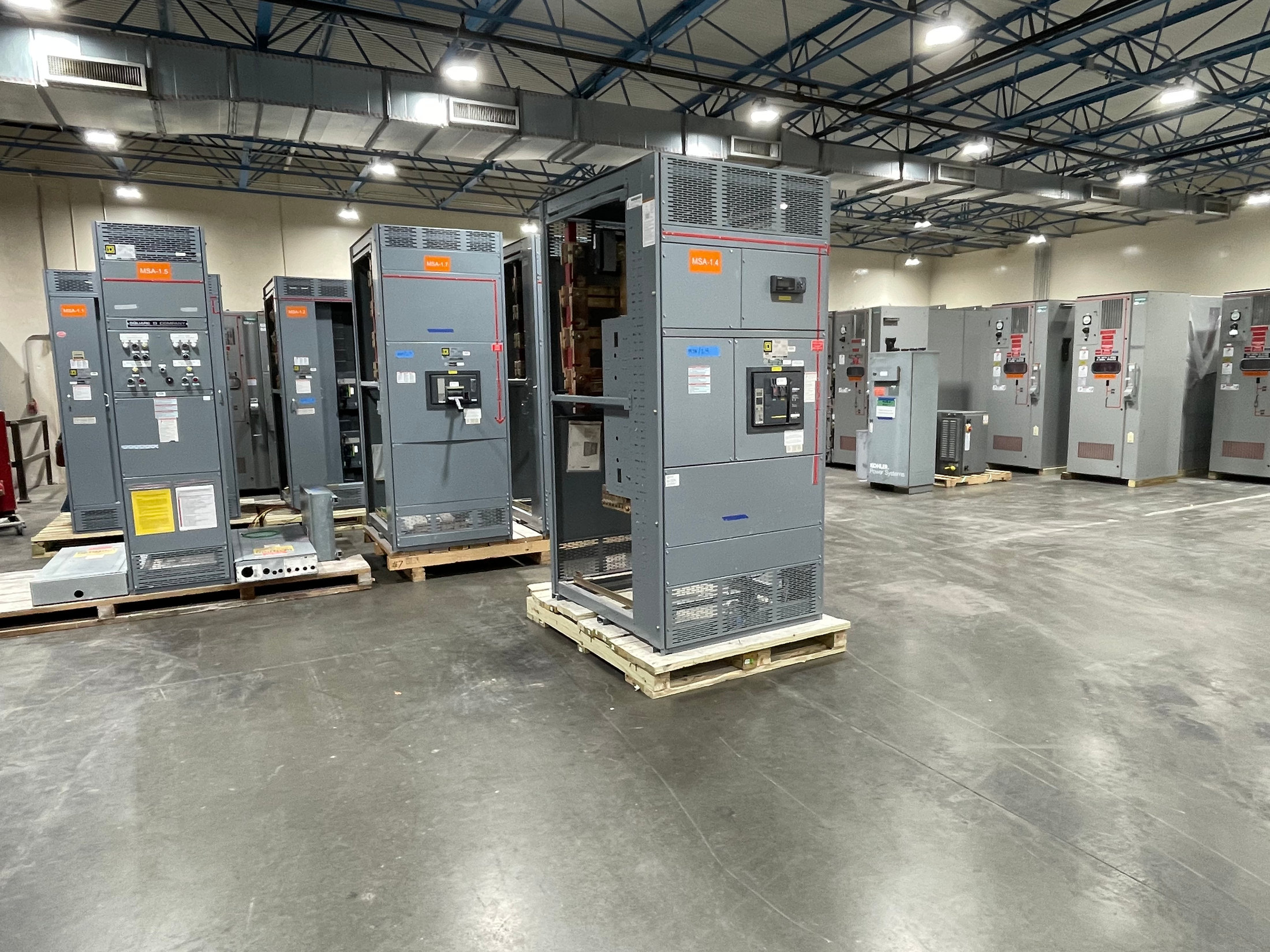
Build the inventory from records already available to the seller, such as asset lists, retirement documentation, or existing section labels. Keep lineup identity distinct from component identity: record the name used for the overall lineup, then associate each included section and removable component with that name where records support the connection. Note items known to be excluded, retained, or assigned to another buyer. This prevents a price discussion from quietly shifting between a complete lineup, selected sections, and loose components, and helps authorized decision-makers compare the proposed sale scope with the actual retirement plan.
Establish Lineup Identity Without Guessing
MCC identity can be unclear when plant records use different names for the same equipment. One document may identify a production area, another an asset number, and an existing label may use a lineup designation. Preserve those names as recorded and explain how the seller relates them; do not silently treat them as interchangeable. If the seller cannot establish a relationship, mark it as unresolved for follow-up. A concise inventory can distinguish known identity, source of the information, and open questions without making unsupported assumptions about equipment details.
If information is already safely accessible, the seller may share existing labels or photographs as optional reference material. No one needs to approach equipment or alter their access arrangements to create a record. Photos should supplement, not replace, the written scope: identify which sections or components are pictured and whether they are included in the proposed sale. Where a photograph does not resolve a lineup or component’s identity, state that plainly. Clear uncertainty is more useful than an inferred match, particularly when several production areas or retirement packages are being coordinated.
Reconcile Removable Components With the Sale Boundary
Removable components deserve their own inventory treatment because they can be confused with complete sections or with equipment that remains under the plant owner’s control. The seller’s records should indicate which components are included, which are excluded, and which cannot yet be assigned confidently. Keep counts and descriptions tied to the seller’s existing records rather than estimating from memory. If components have been grouped separately from the lineup, show that relationship in the inventory so the buyer can review whether the offer concerns the group, the lineup, or both.
A useful reconciliation compares the proposed sale list against the retirement package and identifies discrepancies for the seller to resolve. For example, a component appearing on an asset list but absent from the stated sale scope should be marked as excluded or pending clarification, not assumed to be included. Likewise, an item described as part of a lineup should not be counted again as a separate loose item unless the seller’s records establish that distinction. This simple accounting reduces scope disputes and helps ensure the final agreement names the equipment the seller is authorized to transfer.
Tie the MCC Sale to Production Shutdown Boundaries
A manufacturing shutdown may be staged by production area, building, or retirement date. The MCC sale scope should reflect those boundaries because equipment associated with one production area may remain in place or under operational control while another area is retired. The seller can describe the boundary using its own project documents: which lineup or sections are within the retired scope, which are outside it, and whether any components are reserved. Avoid relying on a broad phrase such as “shutdown equipment” when the project has distinct phases or separate disposition decisions.
The buyer’s coordination should follow the seller’s authorized scope and access arrangements. The owner controls access and determines when the included equipment is available for pickup. Before agreeing on logistics, reconcile the equipment list with the shutdown boundary and identify any outstanding decisions that could change what is being sold. This is especially important when production, maintenance, facilities, and asset-management records describe the same equipment differently. A shared, current scope lets the parties discuss the sale and pickup as one defined transaction rather than treating an entire plant retirement as a single undifferentiated package.
Confirm Seller Authorization and Decision Authority
A plant retirement can involve several internal stakeholders, but the sale must be authorized by the party with authority to transfer the equipment. The seller should confirm who can approve the inventory, settle the included-versus-excluded questions, agree to sale terms, and coordinate pickup. If a contractor or project manager is communicating on the owner’s behalf, clarify the scope of that authority before treating the inventory or proposed terms as final. This protects the seller’s control over equipment assigned to another project, retained for internal purposes, or subject to a separate disposition decision.
Authorization also helps resolve conflicting records. If one department lists a section for sale while another identifies it as retained, do not treat the conflict as resolved by choosing one record informally. Ask the authorized seller to confirm the disposition and update the scope accordingly. The buyer can review the clarified inventory and make an offer based on the equipment presented. A cash offer is subject to agreement and depends on the equipment; there is no promise that every component or complete lineup will receive an offer.
Coordinate Payment and Pickup Around the Agreed Scope
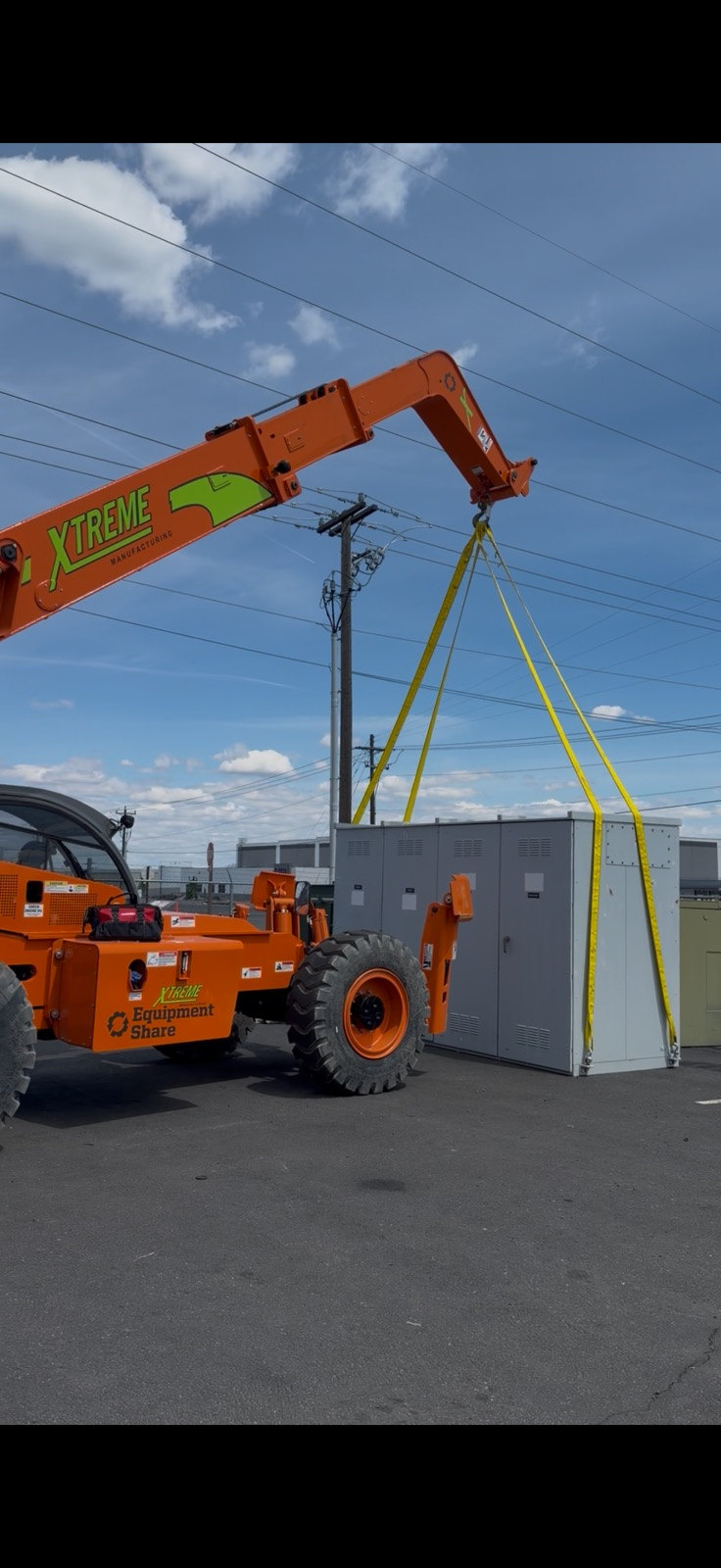
Once the seller and buyer agree on the equipment and terms, payment is made upfront before pickup. That timing should be clear in the transaction planning, alongside confirmation of the included lineup sections and removable components. We handle cranes, rigging, disconnects, loading, freight, and hauling. The seller does not need to arrange those services as part of the sale. The owner retains control of site access and coordinates when the agreed equipment can be made available for pickup within its shutdown plan.
We do not require seller testing. The seller should not test, energize, open, disconnect, dismantle, or physically handle equipment for the purpose of preparing it for our review or pickup. Any optional photos or labels should be limited to material already safely accessible to the seller. These boundaries let the parties focus on inventory accuracy, authorization, payment, and logistics without turning an equipment sale into a request for the seller to perform technical work. The agreed scope and pickup coordination remain subject to the seller’s control of the site and the final agreement.
A Clear Transaction Record for the Retirement Package
For a Butler County manufacturing retirement, a well-reconciled MCC sale record can connect the inventory to the project without assuming that every retired asset belongs in the same transaction. Keep the final equipment description consistent across the seller’s approved scope, the agreement, and pickup coordination. Record unresolved items separately rather than allowing them to drift into the sale by implication. If the retirement changes, the seller can clarify whether the revised lineup or component scope is still available for an offer before the parties proceed.
This approach distinguishes an MCC retirement sale from a general review of surplus electrical equipment: the central task is matching lineup identity, component disposition, production shutdown boundaries, and seller authorization. We buy used, surplus, and decommissioned equipment and can consider the defined MCC scope for a cash offer. Payment is upfront before pickup, and we coordinate cranes, rigging, disconnects, loading, freight, and hauling. The transaction proceeds only when the equipment and terms are agreed, with the seller retaining authority over access and the scope of the sale.