Who owns the equipment scheduled for release?
Before discussing a phased collection, confirm who has authority to sell each group of electrical assets. A data center may include equipment owned by the facility operator, a landlord, a tenant, a lender, or another party. Equipment records, purchase documents, lease terms, and decommissioning agreements can help establish ownership and identify any approval needed before a sale. The person coordinating the site’s transition may not have authority to sell every item there, so clarify that point before treating a proposed release as an available lot.
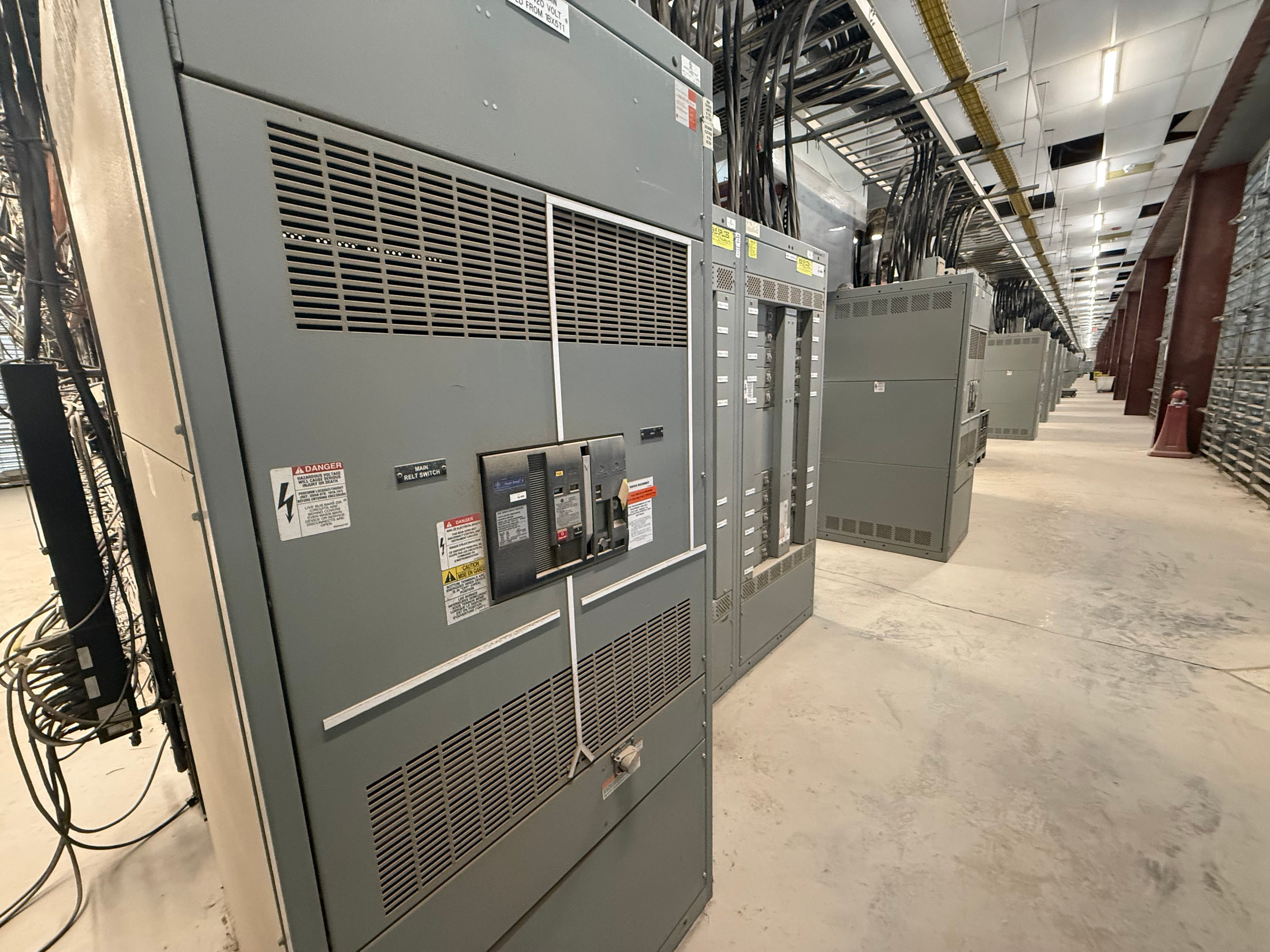
We buy used, surplus, and decommissioned electrical distribution equipment in Pennsylvania, including switchgear from decommissioned data centers. A purchase depends on the equipment and the parties’ agreement. When a site has multiple owners or decision-makers, identify which organization can approve the sale and who will coordinate each release. That gives both sides a clear basis for discussing equipment, access, collection boundaries, and payment without assuming that every item shown in a room or inventory belongs to the seller.
What is included in each release?
For a phased sale, define the equipment by release group rather than treating an entire data center as one undifferentiated lot. A group might be described by the seller’s existing inventory references, location names, equipment categories, or another identifier already used in facility records. The purpose is to make clear which assets are being offered together and which remain outside the proposed sale. Keep the description tied to information the seller can verify; do not rely on room contents alone to establish what is included.
Clarify whether associated components, spare parts, stored items, or loose equipment are part of a particular lot. If the seller wants to offer a partial lot, state the intended boundary and identify items that are excluded or reserved. We consider the equipment presented for sale and may make a cash offer based on the items and circumstances. There is no obligation to include equipment the seller is not authorized to sell, and an offer is not assured for every item. A specific scope helps prevent a later disagreement over whether an asset was included in the agreed sale.
Which milestones define the release?
A phased decommissioning plan often has separate points when equipment becomes available for sale and collection. Those milestones might be tied to the seller’s own project decisions, such as completion of a business transition or approval to release a defined group. Share the anticipated sequence and any known dependencies, then identify which items are currently available for discussion and which are expected to be considered later. This supports practical coordination without turning a project forecast into a promised pickup date.
Keep each proposed release distinct in the sale discussion. For example, one group may be ready for an offer while another remains under review or subject to a later ownership decision. We can discuss equipment as it is identified and available, but collection timing depends on the equipment, scope, access, coordination, and mutual agreement. A planned milestone is useful context, not a fixed schedule or guarantee. If a project date changes, update the parties handling the sale before relying on the earlier plan.
How will stored equipment be treated?
Equipment held in storage can complicate a phased sale if the records do not show whether it belongs to an earlier release, a future lot, or a separate owner. Identify the storage area or existing inventory reference and clarify whether the stored items are included in the proposed scope. If equipment is being retained for another purpose, mark it as outside the sale in the seller’s own records and communicate that boundary to the sale coordinator. This is especially useful when items from different phases share a storage location.
Storage conditions and duration may affect how a buyer evaluates a particular lot, but they do not establish ownership or guarantee an offer. Provide the information the seller already has about the items and their status. Photos or labels are optional and should only be shared when already safely accessible. No one needs to open equipment, move it, or perform testing to start a discussion. The owner controls site access and decides what information can be shared; keeping those decisions with the owner helps the parties coordinate a sale without disrupting other facility work.
What should pickup coordination cover?
Discuss collection boundaries for each agreed release, including where the equipment is located and what access arrangements the owner will authorize. A facility may have distinct areas, operating restrictions, or overlapping project activities, so explain relevant coordination needs through the site’s designated contact. The owner remains in control of access and any site permissions. We handle cranes, rigging, disconnects, loading, freight, and hauling for an agreed purchase, with the collection arranged around the agreed scope and site coordination.
Do not treat a tentative release window as a commitment by either side. Collection arrangements depend on agreement about the equipment and coordination with the owner. If a lot is divided into multiple releases, confirm which release is being discussed so that access and collection are not confused with later phases. The seller should identify any items that are not part of the sale and keep those boundaries clear to the people coordinating site access. A defined scope and authorized access are more useful than a broad project date that does not specify which equipment is available.
What payment terms apply before collection?
We make cash offers for equipment we are interested in buying. Any offer applies to the equipment and scope agreed between the parties; it does not mean that every item in a data center will receive an offer. For a phased transaction, make clear which release or partial lot an offer covers and confirm the agreed sale before planning collection. If later releases contain different equipment or a changed scope, they require their own discussion and agreement rather than automatically falling under an earlier offer.
Payment is made upfront before pickup. This term should be settled for the agreed lot before collection begins, not left to an assumption based on the project’s broader schedule. The seller can coordinate payment and release through its authorized representative and keep the agreed equipment boundary aligned with the payment. We do not require seller testing. No testing, energizing, opening, disconnecting, dismantling, or physical handling by the seller is needed for us to consider a purchase; collection work is handled as part of an agreed sale.
How should the sale proceed if the plan changes?
Phased projects can change as ownership approvals, facility plans, or release decisions evolve. If a milestone moves, a stored group is reclassified, or a partial lot changes, tell the buyer which equipment remains available and which is no longer included. Reconfirm the scope before arranging collection so that the sale discussion continues to reflect the seller’s current authority and intent. Later phases should be treated as separate decisions unless both parties agree otherwise; an earlier conversation does not automatically commit either party to future equipment or dates.
A practical sequence is to establish ownership, define the available lot, discuss the equipment and any cash offer, agree on the sale and upfront payment before pickup, then coordinate access and collection. We buy used, surplus, and decommissioned electrical distribution equipment across voltage classes, including switchgear from decommissioned data centers and shut-down power plants. Each purchase depends on the equipment and agreement. Clear release boundaries and communication about changing milestones make it easier to consider partial lots and coordinate collection without promising a fixed schedule.