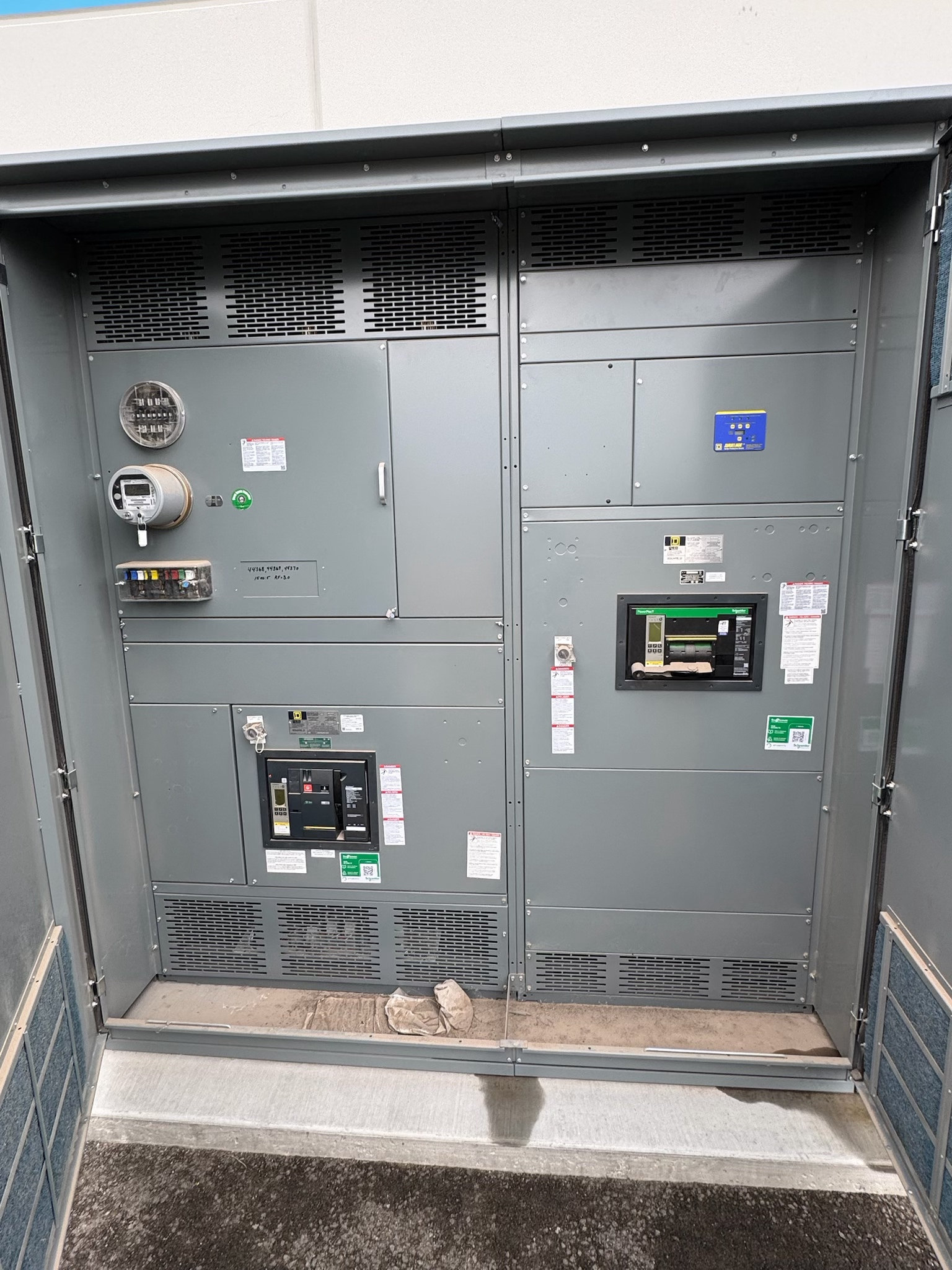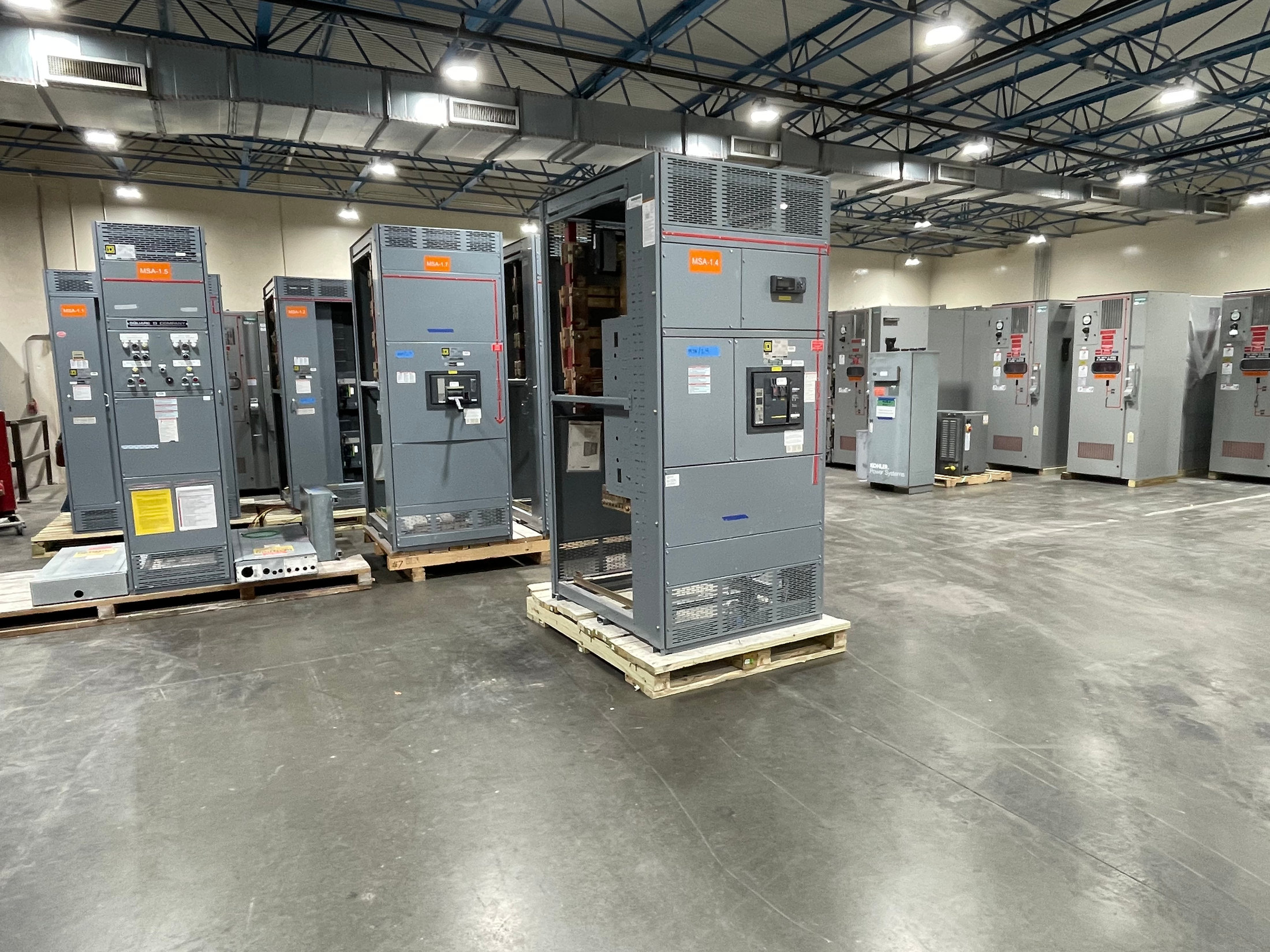
Decide What Is Available for Sale
Begin by defining which parts of the power plant switchgear lineup the owner is prepared to sell. A lineup may be offered as an assembled group, as selected sections, or with certain breakers and other items retained. Those choices shape the buyer’s review: an intact assembly is different from a collection of loose components, and a partial sale depends on a clear boundary between available equipment and retained property.
Set out the intended sale scope in practical terms: which lineup segments are included, which breaker inventory is available, and what will remain with the owner. A cash offer depends on the equipment and the scope agreed upon. We buy used, surplus and decommissioned electrical distribution equipment, including switchgear from shut-down power plants, across all voltage classes. An inquiry does not guarantee an offer for every item.
Separate Lineup Assemblies from Loose Components
Identify whether the sale concerns complete lineup assemblies, individual sections, loose breakers, or a combination. Connected sections presented as a lineup should be distinguished from equipment that has already been separated into individual sale items. This distinction helps establish what the buyer is being asked to acquire and whether the proposed sale is a whole-lineup or partial-inventory transaction.
Keep the inventory description at the level the owner can confirm without handling equipment. Existing records may help distinguish lineup sections from separately held breakers and other components. Photos or labels are optional and should be shared only when already safely accessible. Do not open equipment, move items, or perform work to prepare information; the owner controls site access and any authorized access arrangements.
Define Partial Availability and Retention Scope
A power plant sale may involve only part of a lineup or selected breaker inventory. State which sections and breakers are available, which are excluded, and whether any associated components are part of the proposed sale. If the owner intends to retain particular equipment, identify those exclusions in the inventory description so the buyer can review the sale as proposed rather than assume the entire lineup is included.
Clear boundaries matter when offered assemblies sit alongside retained equipment. Describe the available group using existing inventory records or other information already at hand, and note any known gaps without estimating or inventing details. The eventual offer depends on the specific equipment and agreed scope. If the owner changes what is available, the buyer’s review may need to reflect that revised selection.
Give the Buyer a Useful Inventory Picture
For an initial review, organize available information by lineup segment and breaker inventory. Use descriptions already present in plant records where practical, and distinguish confirmed sale items from items whose availability is still being decided. The aim is a readable account of the proposed transaction, not a new technical survey or a request for the seller to inspect equipment.
Existing documents, photographs and labels can support the discussion when they are already safely accessible. Sharing them is optional. A seller does not need to test equipment or create new access to answer an inquiry. We make purchase decisions based on the information available and the equipment under consideration; no testing by the seller is required as a condition of submitting a sale inquiry.
Coordinate Access and Removal Around the Sale
Once the equipment and sale scope are agreed, coordinate access with the owner’s authorized site representatives. The owner controls access and determines what site arrangements apply. Share relevant access requirements and identify the equipment included in the sale so the removal plan can be coordinated around the agreed lineup segments and any retained inventory.
We handle cranes, rigging, disconnects, loading, freight and hauling as part of buyer coordination. The seller is not expected to arrange those activities or physically handle the equipment. Planning can account for whether the agreed purchase is an assembly, selected lineup sections, or loose items, while respecting the owner’s control of the site and equipment access.
Review the Offer and Payment Terms
We make cash offers for equipment we are prepared to buy, with the offer based on the specific inventory and scope under discussion. The seller can review whether the proposed purchase covers the available lineup segments, selected breakers, or both, and confirm any exclusions before agreeing to the transaction. An offer is not assured for every item or every proposed scope.
Payment is made upfront before pickup. That timing should be agreed as part of the sale before removal is coordinated, so payment and pickup are aligned with the confirmed equipment being sold. No seller testing is required. The buyer handles cranes, rigging, disconnects, loading, freight and hauling for equipment purchased under the agreed transaction.
Move from Inventory Review to a Clear Agreement
A productive sale discussion connects three things: the lineup or components offered, the portion the owner is retaining, and the removal arrangements for the purchased items. Confirm those points before pickup coordination so both parties understand whether the transaction covers assembled sections, individual breakers, or a defined combination. The agreed scope is the basis for the purchase and its logistics.
For a Pennsylvania power plant switchgear sale, begin with the owner’s available inventory information and a clear statement of what can be sold. We review the proposed equipment and scope, make a cash offer when appropriate, and coordinate the agreed removal with payment upfront before pickup. The owner retains control of access, while we manage the handling and transportation work for the equipment we buy.