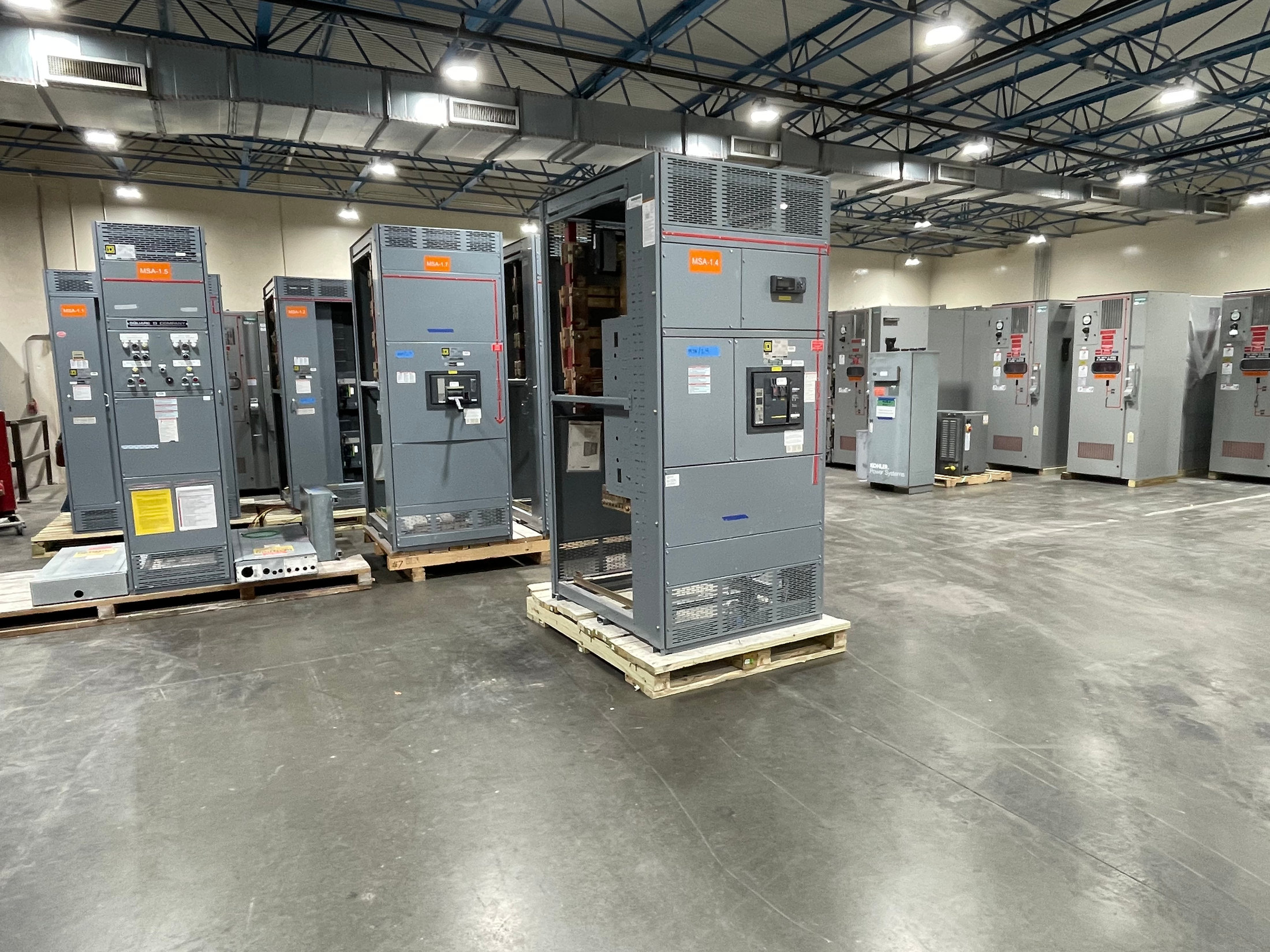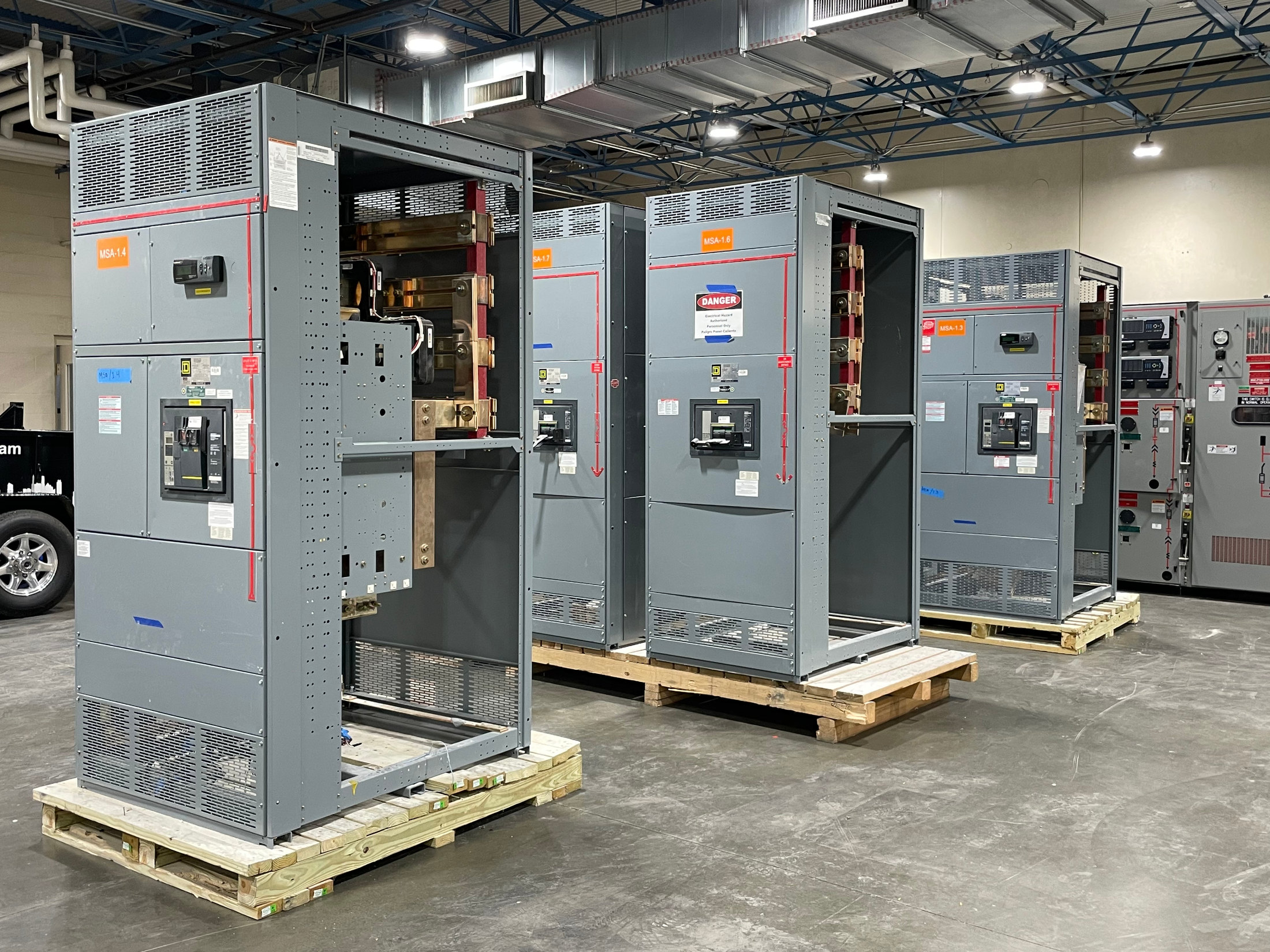
A Focused Sale of Power Plant Breaker Spares
Power plants may hold circuit breakers as spare inventory for maintenance, replacement, or planned work. When ownership or operating needs change, those breakers can be considered for sale as a distinct group rather than folded into a larger facility-equipment disposition. For a Pennsylvania seller, the useful starting point is a clear account of what is stored, how the items are identified in existing records, and whether the inventory is separate from installed equipment.
We buy used, surplus, and decommissioned electrical distribution equipment, including circuit breakers and switchgear across all voltage classes. We consider spare breakers individually or as part of a broader equipment lot, depending on the equipment and the terms both parties agree to. An offer is not assured for every item. The distinction between stored spares and installed breakers matters because it affects the scope being discussed, the records available, and the practical coordination required for a sale.
Stored Spares Versus Installed Breakers
Loose breakers already held in storage are different sale candidates from breakers that remain installed in electrical distribution equipment. A stored spare may be identifiable through inventory records, tags, or labels that are already safely accessible. Installed breakers belong to a larger physical assembly and require coordination around that assembly, its ownership, and the seller’s access arrangements. The sale discussion should make this distinction explicit instead of treating every breaker listed on a plant inventory as equally available.
This difference also helps define whether the proposed transaction concerns individual breakers, a designated spare-parts group, or a larger lot that includes associated equipment. We buy equipment; we do not ask sellers to remove breakers, open equipment, or perform testing. If an item remains installed, its status and the seller’s intended scope can be discussed without the seller carrying out physical preparation. The owner controls site access, and any coordination involving equipment or the facility proceeds through the owner’s arrangements.
Manufacturer, Model, and Inventory Records
Existing manufacturer and model information can help distinguish one breaker from another and connect a physical item with the seller’s records. Inventory descriptions, asset identifiers, storage locations, and acquisition or custody records may also help establish which items are being offered. These details are useful for defining the proposed group; they do not, by themselves, establish a price or guarantee that every listed breaker will receive an offer.
A seller can share information already present in ordinary records, such as an inventory export or asset list. Photos or label details are optional and should only be provided when they are already safely accessible; there is no need to approach, open, move, or handle equipment to obtain them. We do not require seller testing. The buyer’s review and any resulting cash offer depend on the equipment and the agreed scope, rather than on an assumption that a record entry alone establishes condition, completeness, or saleability.
Ownership and Storage Scope
Before discussing a sale, identify which organization owns the spare inventory and who is authorized to agree to its disposition. At a power plant, breaker spares may be tracked separately from installed assets, managed under different records, or held in storage for a specific owner. A clear ownership account helps keep the proposed transaction limited to items the seller is entitled to sell, without implying anything about a particular facility or its operating status.
Storage records can help define the group by showing item descriptions, quantities, identifiers, or recorded locations. They can also help distinguish breakers set aside as spares from equipment still assigned to a system or included in another asset package. We can discuss the records and scope with the seller, then determine whether an offer is appropriate. If the inventory is part of a wider plant lot, the seller can identify that relationship while keeping the breaker-spare portion separately described.
Compare Storage With an Offer
Keeping breaker spares in storage may preserve the seller’s option to retain them for future needs, while selling can convert suitable surplus equipment into a cash transaction and remove it from the seller’s inventory responsibilities. The relevant comparison is not simply storage cost against an assumed market value. It also includes the owner’s plans for the spares, the clarity of ownership records, the proposed lot boundary, and whether the items are actually available for sale. We do not assign value to every listed item, and an offer depends on the equipment and mutually agreed terms.
A practical decision begins with the records the owner already maintains and a defined group of breakers under consideration. From there, the seller can compare the possible offer with the reasons for retaining the inventory, without arranging seller testing or preparing items for pickup. Photos and labels are optional, and only information safely at hand needs to be shared. If the items are not available, are needed for operations, or cannot be included in an agreed scope, there may be no transaction for that portion.
Offer, Payment, and Pickup Coordination
For equipment we agree to buy, we make cash offers, with payment upfront before pickup. The sale proceeds only by agreement; the seller is not committed unless the terms are accepted. We do not require seller testing, and we do not ask the seller to energize, open, disconnect, dismantle, or physically handle equipment as a condition of discussing a sale. The owner controls site access and determines who may enter the property and when coordination can occur.
We handle cranes, rigging, disconnects, loading, freight, and hauling as part of buyer-side pickup coordination for an agreed purchase. The specific scope depends on the equipment, its location, and the arrangement agreed with the seller. For loose stored breakers, the discussion can be limited to the identified inventory; for installed breakers or a larger lot, coordination can reflect the broader equipment scope. Clear records and an agreed boundary help both parties understand what is included before payment and pickup are arranged.
A Defined Breaker Lot, Not an Assumed Plant Teardown
A power plant breaker-spare sale can stand on its own. The seller may offer selected stored breakers while retaining other inventory, or may include them within a broader disposition if that is the agreed scope. Either way, the transaction should identify the items covered through available records and distinguish spare inventory from installed electrical equipment. This narrower approach avoids treating a spare-parts list as proof that an entire plant electrical system or facility is for sale.
We buy electrical distribution equipment from owners considering individual items, surplus groups, or larger agreed lots, including switchgear from decommissioned data centers and shut-down power plants. That broader buying scope does not turn every breaker inventory into a plant teardown or guarantee an offer. For Pennsylvania sellers, the next useful step is to define ownership, identify the breaker group from existing records, and discuss whether the equipment and proposed scope are a fit for a cash offer and coordinated pickup.