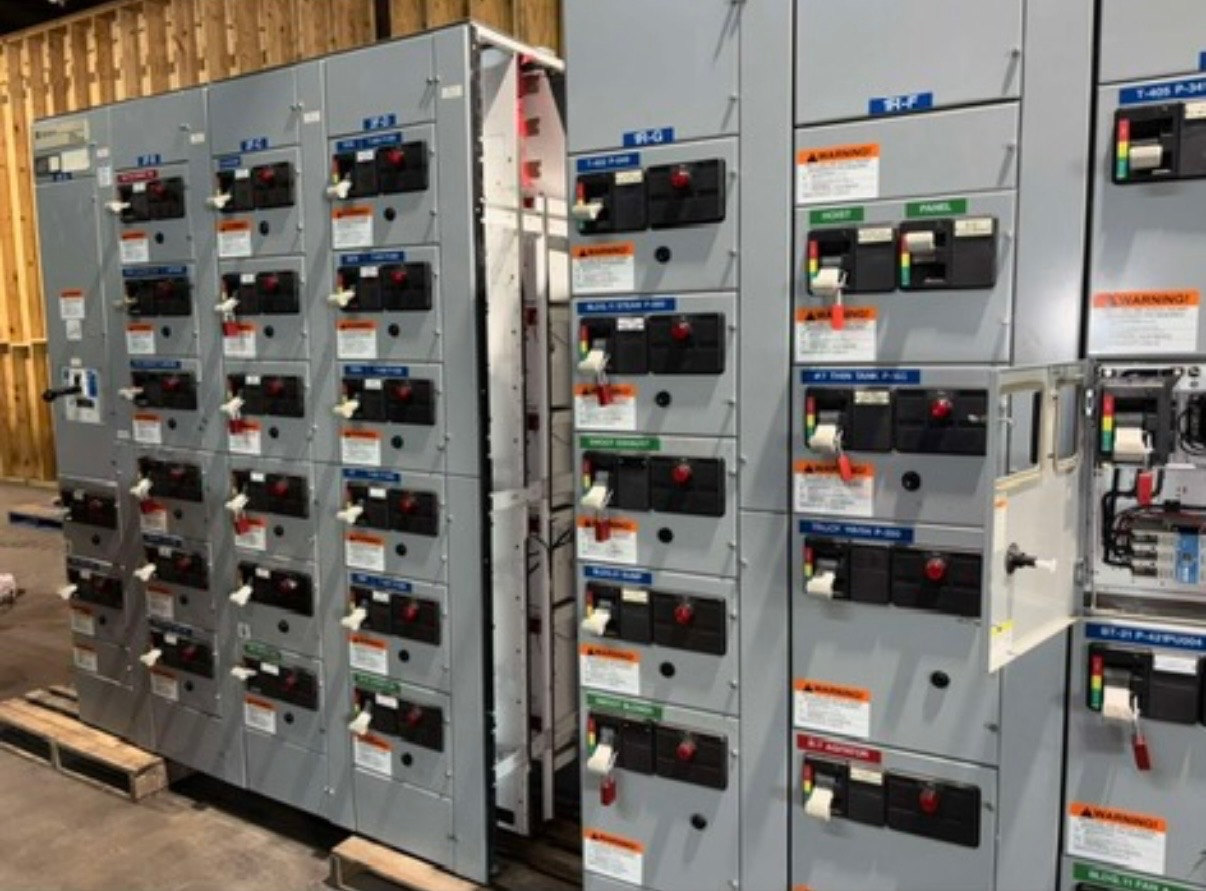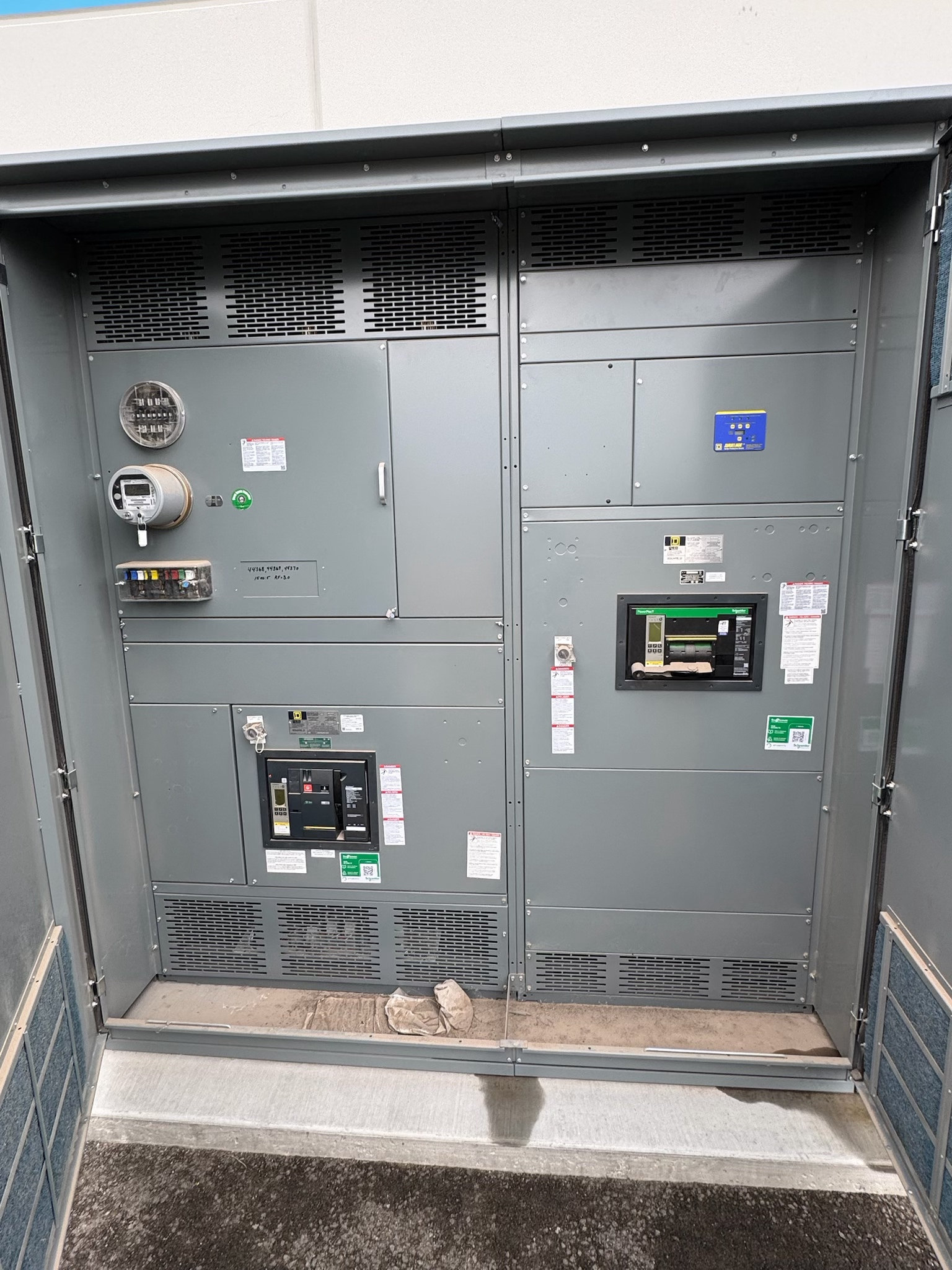
Panelboard Resale Begins With Ownership and Scope
After a data center fit-out change, panelboards may remain in place even when tenant layouts, distribution plans, or operating requirements have changed. Before considering a sale, establish which boards belong to the property owner and which are tenant-owned fixtures or otherwise controlled by another party. A board’s location within a suite or its appearance on a project record does not, by itself, settle ownership. Clear ownership and authority to sell help define which equipment can be included in a buyer discussion.
Our Pennsylvania business buys used, surplus, and decommissioned electrical distribution equipment. We consider panelboards as part of a potential purchase, but an offer depends on the equipment and the proposed scope. We do not represent every board as saleable or promise an offer for every item. The useful starting point is a distinction between equipment confirmed as available for sale and equipment whose ownership, disposition, or continued use remains unresolved. That distinction matters especially when tenant fixtures and building-owned distribution equipment are mixed in the same area.
Use Schedules to Describe the Equipment, Not to Assume Its Condition
Panelboard schedules and other existing records can help identify board names, stated quantities, and assigned circuits. For a resale discussion, those records are useful as descriptions of the documented installation, not as proof that each entry remains current or that a listed board is available. Fit-out changes can leave records that reflect an earlier arrangement, while retained circuits may still serve loads that the owner intends to keep. Separating documented information from confirmed disposition reduces ambiguity in the proposed sale scope.
No electrical testing is required for us to consider equipment, and sellers should not test, energize, open, disconnect, dismantle, or handle boards for a sale discussion. Information should come from records already available to the owner. If photographs or labels are already safely accessible, they are optional; there is no need to gain access or move anything to prepare them. When a schedule, quantity, or circuit assignment is uncertain, describing it as uncertain is more useful than treating an old record as verified equipment status.
Separate Retained Circuits From the Sale Lot
A panelboard may be physically surplus while some circuits associated with the surrounding distribution remain part of the owner’s retained infrastructure. The sale scope should therefore distinguish boards proposed for disposition from boards or circuits the owner intends to retain. Existing schedules may help frame that distinction, but only the owner’s authorized project and operations personnel can determine what remains in service or is reserved for future use. A buyer’s purchase discussion is not a substitute for the facility’s qualified supervision of operational decisions.
This separation can also clarify whether the proposed transaction concerns individual panelboards or a wider group of distribution equipment. A quantity in a schedule is not automatically the quantity available for purchase: some listed equipment may be tenant property, retained, already removed from the project scope, or otherwise unavailable. Conversely, an owner may identify additional surplus equipment not captured in a particular schedule. We assess the equipment and scope presented for consideration; we do not infer a sale lot solely from a circuit list or fit-out drawing.
Define the Lot Before Coordinating a Purchase
A focused panelboard lot can be easier to discuss than an undifferentiated area-wide clearance. Useful scope information includes which boards are confirmed owner-owned, which are proposed for sale, the quantities the owner can identify, and which equipment or circuits are excluded because they are retained or unresolved. Existing labels and records can provide context when already accessible. Where descriptions conflict, note the discrepancy rather than merging separate boards or treating an uncertain count as final.
A broader lot may include other distribution equipment made surplus by the same fit-out change, but panelboards should not be assumed to represent the whole opportunity. Our business buys switchgear from decommissioned data centers and shut-down power plants across all voltage classes, as well as other used and surplus electrical distribution equipment. That broader purchasing scope is different from deciding whether a particular data center panelboard is available. The proposed lot still needs a clear boundary, and any purchase remains dependent on the equipment and agreement between the parties.
Coordinate Seller Authority and Facility Oversight
The seller controls access to the property and determines who is authorized to make disposition decisions. Where an owner, tenant, property manager, or project team has separate responsibilities, clarify who can confirm ownership and approve the sale scope before scheduling pickup. This is especially relevant after tenant fit-out changes, when room assignments, project records, and ownership boundaries may not align neatly. We coordinate with the authorized seller rather than treating access, title, or decision-making authority as automatic.
Qualified facility personnel retain responsibility for operational matters, including identifying retained circuits and supervising any facility work needed for the owner’s purposes. We do not provide seller testing or ask owners to perform electrical work to prepare equipment for evaluation. Our role is buying and coordinating removal after agreement. If boards are in areas with access restrictions or owner-controlled requirements, those conditions should be communicated through the authorized contact so pickup planning can be coordinated without shifting control of the site away from the owner.
Purchase Terms and Removal Logistics
For equipment we agree to buy, we make a cash offer, with payment upfront before pickup. A purchase requires agreement and depends on the equipment and scope; payment terms do not mean that every identified board will receive an offer. Once the parties agree on the equipment included, we coordinate pickup with the seller. The owner does not need to arrange a sale based on speculative values or assume that schedule entries alone establish a purchase quantity.
We handle cranes, rigging, disconnects, loading, freight, and hauling as part of our removal coordination. Sellers do not need to arrange those services for us or physically prepare the equipment. The owner retains control of site access and qualified supervision, and the pickup plan is coordinated around the agreed scope and site requirements. This approach lets a seller discuss a specific panelboard lot without turning a resale inquiry into a request for the owner to test, move, or dismantle equipment.
A Practical Path From Fit-Out Change to Sale Discussion
For a Pennsylvania data center owner considering panelboard resale, the key questions are whether the equipment is owned by the seller, whether it is genuinely surplus, what quantity can be identified, and which circuits or equipment must remain. Existing schedules, inventory records, and safely accessible labels may help answer those questions, while uncertain or conflicting details can be identified plainly. The resulting scope can be limited to panelboards or expanded to include other confirmed surplus distribution equipment from the same change.
With ownership and scope established, we can consider the described equipment for a cash offer. If the offer is accepted, payment is made upfront before pickup, and we handle the agreed removal logistics, including cranes, rigging, disconnects, loading, freight, and hauling. No seller testing is needed. Whether a purchase proceeds depends on the equipment and agreement, so the clearest discussion is one grounded in confirmed ownership, a defined lot, and a careful separation between sale items and retained infrastructure.