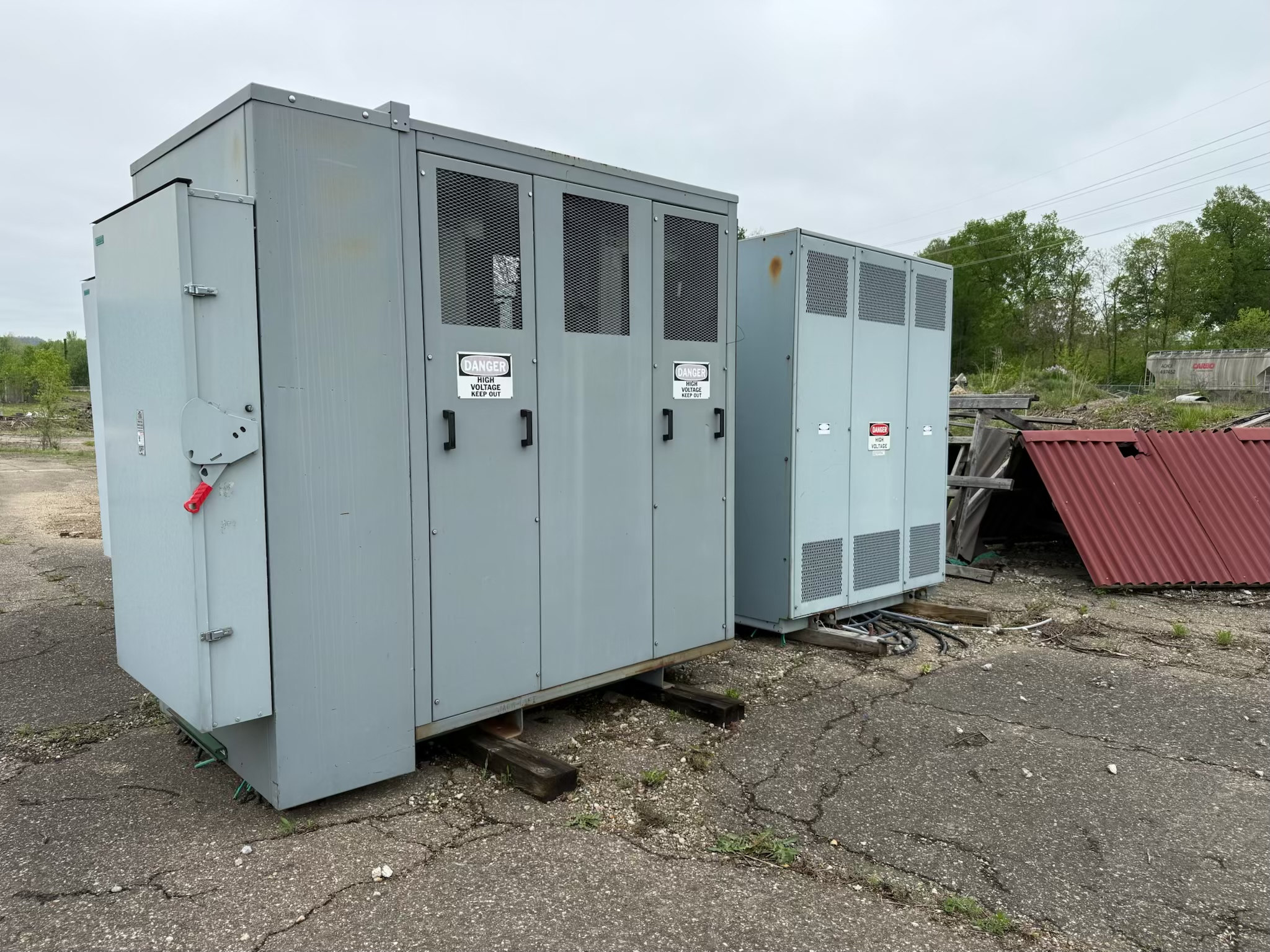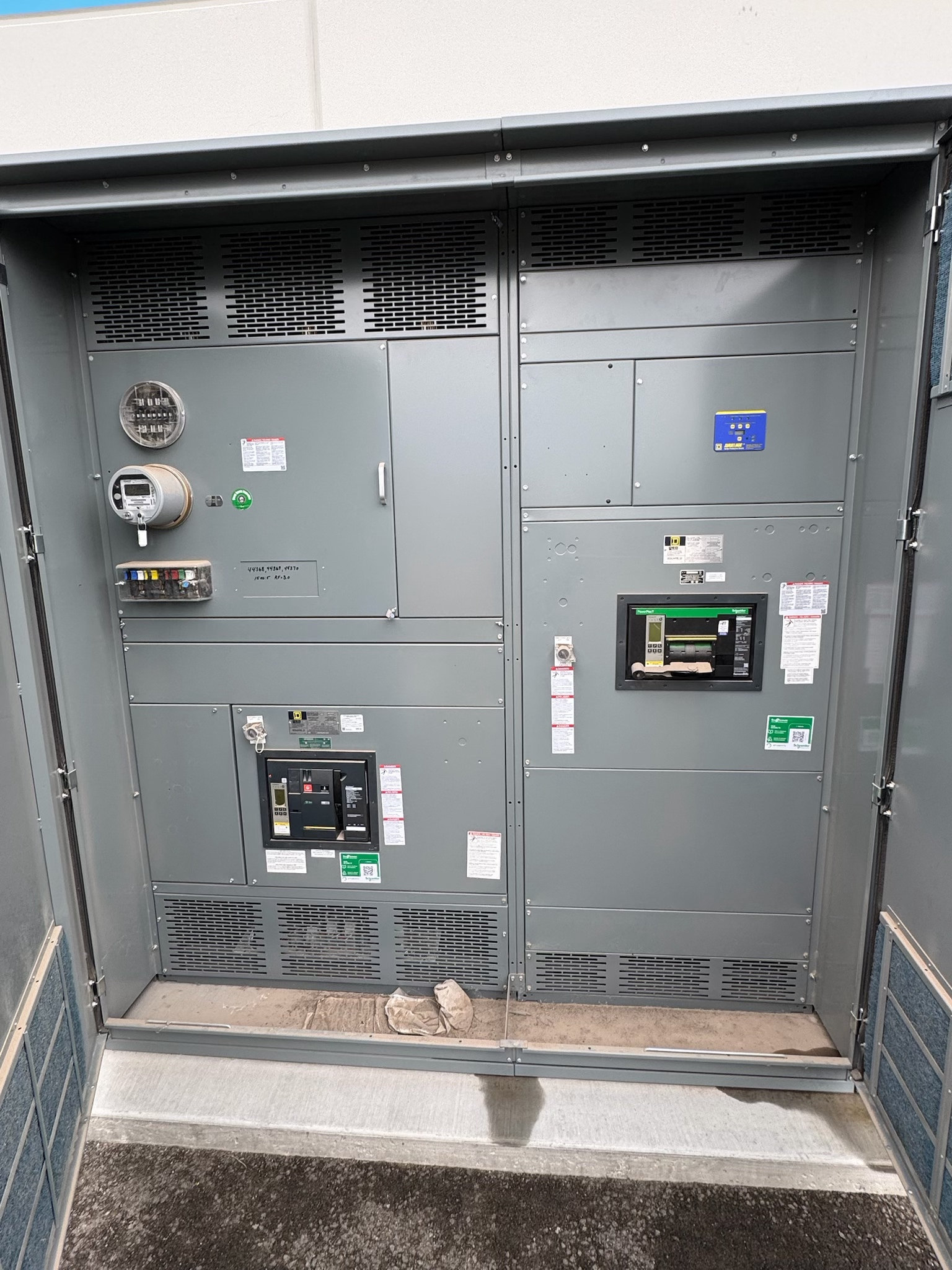
A sale can be evaluated before pickup is planned
A switchgear room with a narrow doorway can raise an important planning question before an equipment sale: can the proposed pickup approach accommodate the equipment and the route out? For a Pennsylvania owner considering a sale, that question belongs in the initial scope discussion, not during removal. We buy used, surplus, and decommissioned switchgear across all voltage classes, including equipment from decommissioned data centers and shut-down power plants. Whether we make an offer depends on the equipment and the information available; not every item will suit a purchase.
An offer can be evaluated without testing the switchgear. No seller testing is required. The owner can describe the equipment and its known condition, and may share photos or labels only when they are already safely accessible. There is no need for the seller to energize, open, disconnect, dismantle, or physically handle equipment to help us consider a purchase. If the equipment and proposed scope are acceptable, we make a cash offer. For an agreed purchase, payment is made upfront before pickup.
Describe the doorway and the route in ordinary terms
Limited clearance may involve a doorway, corridor, turn, threshold, overhead obstruction, or restricted approach to the room. Share the route constraints that are already known, including any measurements the owner has obtained, along with the points where movement or staging may be restricted. Useful context can include which access points are available, whether the route passes through occupied or controlled areas, and whether there are restrictions on when the route may be used. Keep the description factual; measurements should be identified as estimates if they are not confirmed.
The owner controls access and decides what information can be shared. If a measurement would require entering a restricted space, moving an obstruction, or approaching equipment, do not take it for the purpose of an inquiry. Existing drawings, notes, or safely accessible observations may help describe the situation, but they do not replace a qualified review of the actual route and proposed removal. Clear descriptions help identify questions early, while leaving site access and safety decisions with the people responsible for the property.
Scope the equipment and the constraints together
An equipment description is most useful when it is considered alongside the pickup setting. Share what is known about the switchgear being offered, its location, the boundaries of the proposed sale, and any known access restrictions. If multiple pieces are involved, distinguish them by their existing identifiers or location descriptions where readily available. Mention whether the limited doorway affects the route for all equipment or only part of the proposed scope. These details support an informed purchase discussion without requiring the owner to inspect or handle the equipment.
The sale scope and removal scope should be clear before a purchase is agreed. For example, parties may need to establish which equipment is included, what areas are within the authorized access, and whether other property or site restrictions affect the proposed pickup. Describing a narrow entrance alone does not establish that equipment can pass through it. Nor does an equipment description settle how removal would be planned. Those questions require consideration of the actual site conditions and review by qualified professionals responsible for the work.
Coordinate qualified review before committing to a route
Limited clearance can affect equipment access, lifting arrangements, staging, and the path from the room to the pickup point. The proposed approach should be reviewed by qualified professionals who can assess the relevant equipment and site conditions. That review may need to consider the route as a whole rather than treating the doorway as an isolated measurement. Owners can communicate known restrictions and arrange appropriate access under their site rules; they do not need to perform technical assessments or removal work themselves.
When an equipment purchase is agreed, we handle cranes, rigging, disconnects, loading, freight, and hauling. Those responsibilities do not make a route suitable by assumption: pickup planning still depends on the specific equipment, access, and agreed scope. Any necessary site coordination should identify who is authorized to approve access and what restrictions apply. If review identifies an unresolved clearance or access issue, the pickup plan may need a contingency or further coordination before work proceeds.
Use contingencies to address uncertainty
A practical discussion can identify what remains uncertain without treating an estimate as a verified clearance. A doorway measurement may omit a turn beyond the opening; a route may have a restriction that is not apparent from a room description; or a staging area may not be available at the time contemplated. Record known limitations in the scope discussion and flag unresolved points for qualified review. The aim is to avoid relying on assumptions when determining whether an agreed purchase can be picked up as planned.
Contingencies should be specific to the site and the proposed work. Depending on the circumstances, coordination may involve confirming permitted access, reviewing an alternate route, or determining whether a revised pickup arrangement is feasible. Any change to the equipment included, access conditions, or agreed scope should be discussed before pickup. The owner retains control over the property and its access requirements, while qualified professionals assess the work they are responsible for. A purchase offer is not a substitute for that review.
Consider an offer without testing or handling
To consider an offer, start with information the owner already has: a general description of the switchgear, its location, the proposed sale scope, known condition, and the doorway or route restrictions. Optional photos or labels can be shared only if they are already safely accessible. No testing is required, and the seller should not energize, open, disconnect, dismantle, or move equipment to prepare an inquiry. This keeps the initial evaluation centered on available information rather than asking the owner to carry out technical or physical work.
We buy only, and an offer depends on the equipment and the circumstances of the proposed purchase. If the equipment is suitable for a purchase, we can make a cash offer for the agreed scope. Payment is made upfront before pickup. Once the purchase and scope are agreed, we handle cranes, rigging, disconnects, loading, freight, and hauling, with pickup coordination informed by the access restrictions and professional review relevant to the site.
Align the agreement with pickup conditions
Before pickup, the parties should have a shared understanding of the equipment covered by the purchase, the site restrictions already communicated, and the conditions that qualified review has identified for the proposed work. A limited door clearance deserves explicit attention because it can shape the route and removal plan. If new information changes the understanding of access or scope, raise it before pickup so the parties can determine whether further review or coordination is needed.
For Pennsylvania owners selling used, surplus, or decommissioned switchgear, a clear process separates the purchase decision from the physical removal plan. The equipment can be considered without seller testing; an acceptable purchase is paid upfront before pickup; and the buyer handles cranes, rigging, disconnects, loading, freight, and hauling. Route measurements and restrictions help frame the discussion, while qualified professionals review the actual site and proposed work. The resulting plan must fit the agreed equipment scope and the access conditions in place.